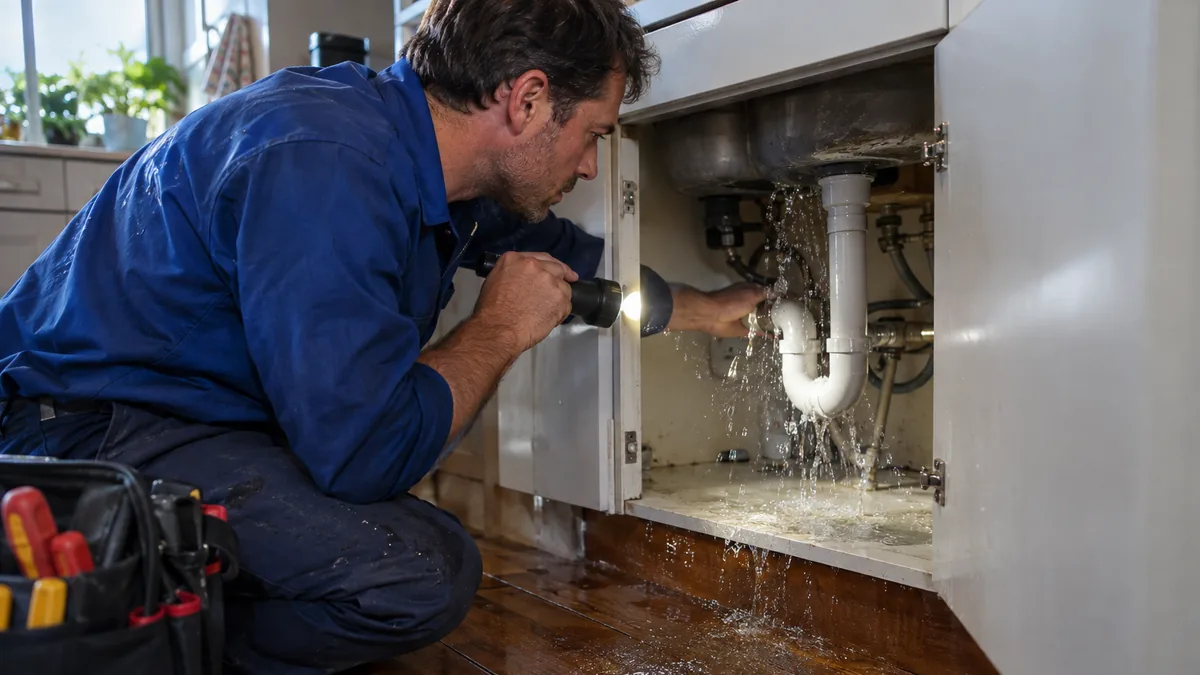
A cold shower on a winter morning is miserable, but it is not always a failed cylinder. Before you book a plumber, a few safe checks can tell you whether the problem is the power supply, the controls, the fuel or the cylinder itself. This guide covers the systems you find in Auckland homes: low-pressure cylinders in villas and bungalows, mains-pressure cylinders in newer houses and townhouses, gas continuous-flow units on natural gas or LPG, and the occasional wetback on a wood burner.
One rule before you start: never take the cover plates off an electric cylinder. The element and thermostat are behind them and they are live at mains voltage.
First, know which system you have
Low-pressure (open-vented) cylinders
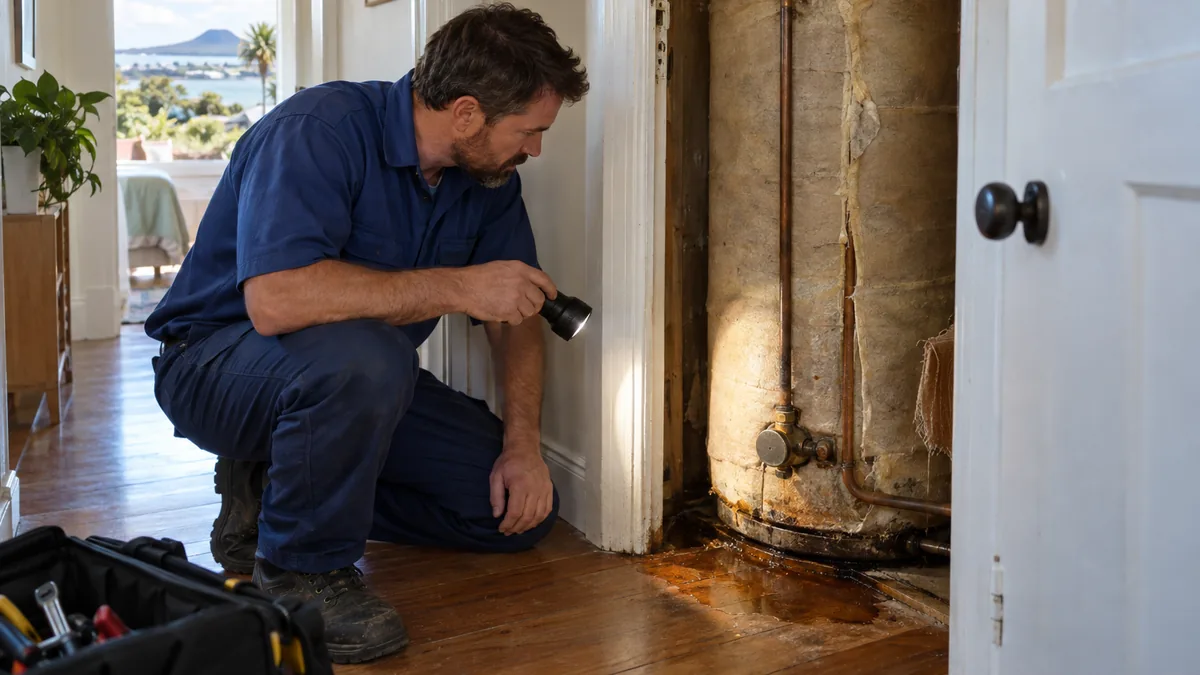
Common in older homes in Ponsonby, Grey Lynn, Mt Eden, Onehunga, Devonport and Birkenhead, and in many state houses. The cylinder is usually copper, often in a cupboard in the hallway or bathroom, fed from a header tank in the ceiling. A vent pipe runs up through the roof. The giveaway is weak shower pressure on the hot side compared with the cold.
Mains-pressure cylinders
Found in most homes built or renovated in the last few decades, and in the townhouses of Flat Bush, Takanini, Hobsonville and Albany. The cylinder runs at mains pressure and has a valve pack: a pressure-reducing valve, a pressure relief valve and often a tempering valve that limits the temperature at the taps. The relief valve has an overflow pipe that runs outside, often to the roof or a wall.
Gas continuous-flow units
A box on an outside wall heats water on demand, using Vector’s reticulated natural gas or LPG from 45 kg bottles. There is no stored hot water, so if the unit stops, the hot water stops immediately.
Wetbacks and heat pump water heaters
Some older homes have a wetback that heats water from a wood burner, usually alongside an electric element. Newer homes may have a heat pump water heater, which has its own controls and error codes.
Checks for an electric cylinder
Work through these in order:
- Is it all the hot taps? If only one tap is cold, the problem may be the tap, a mixer or a tempering valve, not the cylinder.
- Check the switchboard. Look for a tripped breaker or blown fuse labelled “HWC”, “cylinder” or “water heating”. If it has tripped, you can reset it once. If it trips again, leave it off and call a professional, because something is shorting.
- Check any isolating switch near the cylinder, which someone may have switched off.
- Consider ripple control. Many New Zealand homes are on electricity plans where the lines company can switch water heating off for periods when demand is high, often on cold evenings. A cylinder that is the right size normally carries you through. If you keep running out at the same time of day, ask your electricity retailer what control applies to your plan.
- Give it time. After a big run of hot water, such as several showers and a bath, a cylinder needs hours to reheat.
- If the water stays cold with the power on, the element or thermostat has most likely failed. These are the most common cylinder repairs in Auckland and can usually be fixed without replacing the cylinder.
- If the water is too hot or scalding, a thermostat or tempering valve may have failed. Turn the cylinder off at the switchboard and book a plumber.
Checks for a gas continuous-flow unit
- LPG bottles. If you are on LPG, check whether the bottle in use is empty. Most setups have two bottles and a changeover valve; the indicator on the valve shows which side is in use. Order a refill before the second bottle runs out.
- Power. Most gas units need electricity to ignite. Check the power point or switchboard circuit it runs from.
- Error codes. Note any code on the controller in the kitchen or bathroom; it helps the plumber or gasfitter bring the right part.
- Gas at other appliances. If the gas hob also will not light, the supply is the issue, not the water heater.
If you smell gas, do not relight anything or use switches. Open doors, turn the gas off at the meter or bottle if it is safe, get everyone out and ring 111 from outside if the smell is strong. A gasfitter repairs it afterwards. Gas work in New Zealand is restricted work and must be done by an authorised gasfitter; see the emergency gasfitter page.
When the relief valve is running on the roof
A common Auckland call: water, sometimes hot, running from a small pipe on the roof or down an outside wall. That is usually the overflow from the cylinder’s pressure relief valve, or on a low-pressure cylinder the vent pipe.
- A small drip now and then can be normal on some systems.
- A steady flow means the relief valve, the pressure-reducing valve or the thermostat needs attention.
- Steam or very hot water means the cylinder may be overheating. Turn it off at the switchboard straight away.
Do not climb on the roof and do not tie off, block or tamper with the relief valve. It is there to stop the cylinder building up dangerous pressure.
When the cylinder itself is leaking
Water on the floor of the cylinder cupboard, a damp ceiling below a cylinder in the roof space, or rust streaks on the tank all point to a leak.
- Turn the cylinder off at the switchboard (or turn the gas off for a gas cylinder).
- Turn off the cold supply valve to the cylinder, usually on the pipe going in near the top or the bottom.
- On a low-pressure system, the header tank will keep feeding it unless the toby is off too.
- Put towels and a bucket down, protect the floor and photograph the damage.
- Ring a plumber.
A leak from a fitting or valve can usually be repaired. A leak from the tank itself usually means replacement, because the tank cannot be patched. If water has spread, what to do when a pipe bursts covers the steps for protecting ceilings, floors and the power.
Wetback warning signs
A wetback heats water when the fire is lit. When the fire runs hard and little hot water is used, the water can get very hot. Banging or knocking in the pipes, steam from the vent or relief pipe, or water discharging while the fire is going are signs to let the fire die down and get the system checked.
Safety and seismic restraints
A hot water cylinder is heavy when full. Cylinders installed in New Zealand today are expected to be restrained against earthquakes, and many older cylinders in Auckland homes have weak or missing straps. When a plumber repairs or replaces a cylinder, ask them to check the restraints and the valve pack at the same time.
When to call a plumber
Ring a plumber when the cylinder is leaking, the relief valve runs constantly, the water is scalding, a breaker keeps tripping, or the water stays cold after the checks above. The hot water cylinder repairs page explains how a repair or replacement is handled. If you are in the eastern suburbs, the East Auckland page covers the systems common there. The call-out and hourly rate are explained before anyone is dispatched, and the repair is quoted before work starts; what drives the cost of an emergency visit is explained separately.