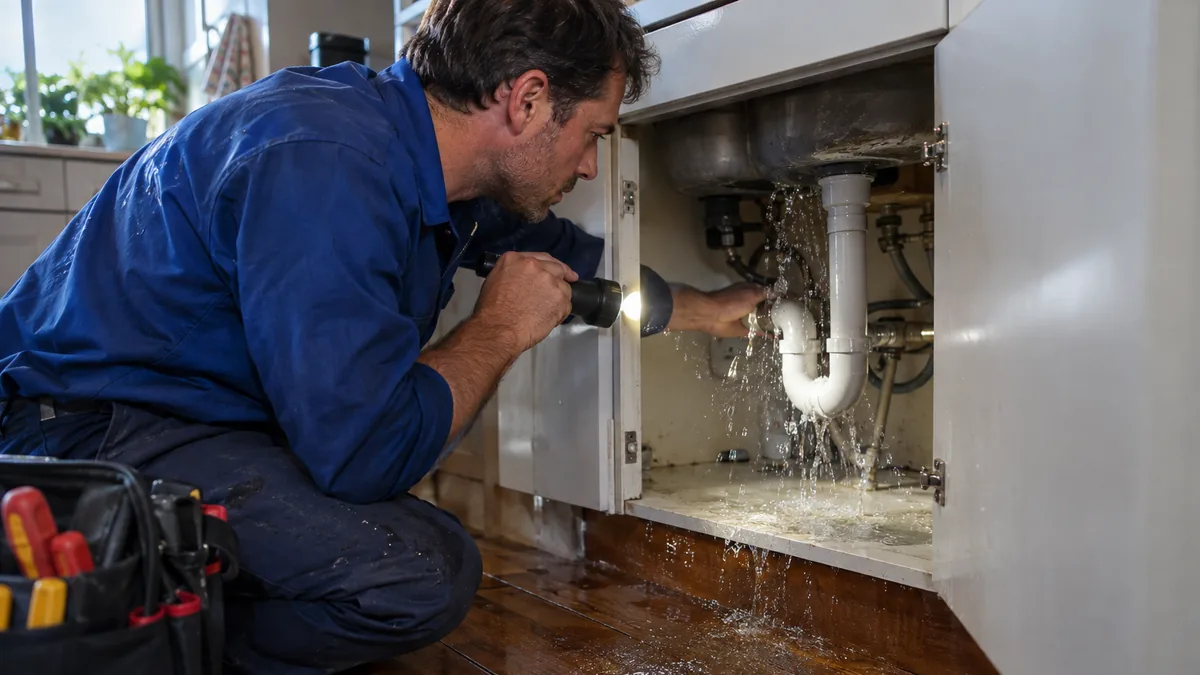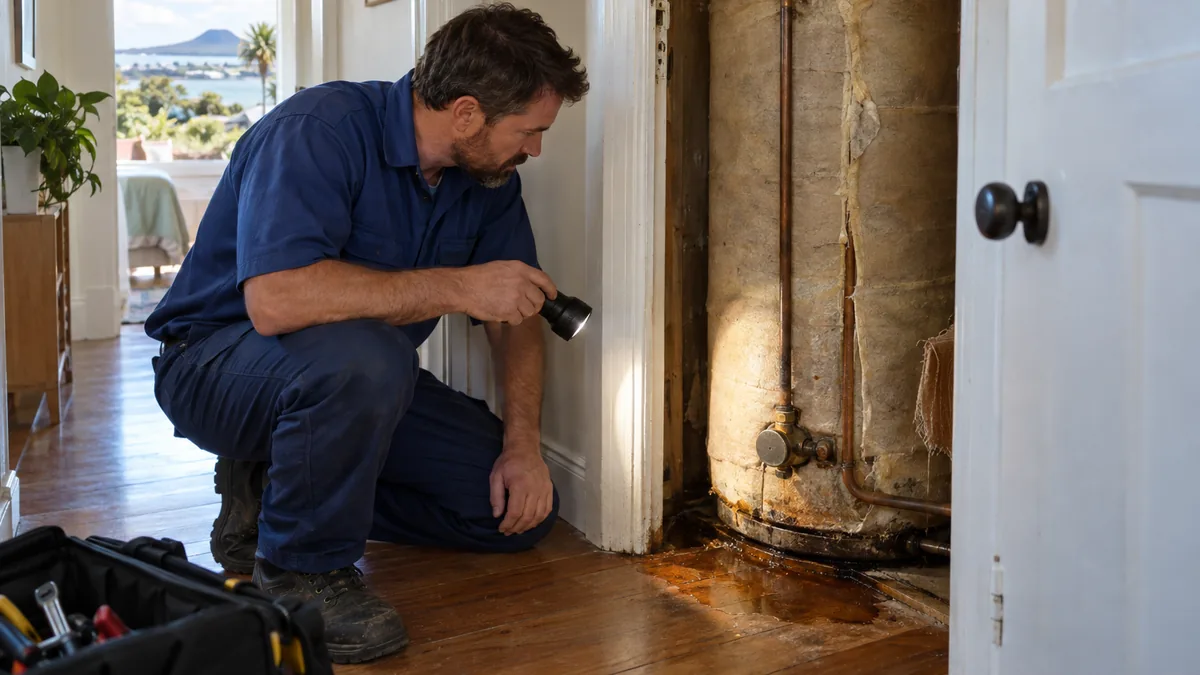
Nobody rings an emergency plumber at midnight for fun. They ring because a flexi hose has let go under the vanity of a Hobsonville Point townhouse, because the gully trap in a Grey Lynn villa is overflowing in a downpour, or because the hot water cylinder in a Pakuranga home has started pouring water through the ceiling. After “how soon can you get here”, the next question is always “how much will this cost”. This post explains what moves the cost of an emergency plumber up or down in Auckland, how to get a clear price before anyone is sent, and how to avoid paying for an after-hours visit when the job could safely wait until morning.
It does not give dollar figures. Every job is different, and a single number on a web page is either an average of jobs that have nothing in common or a figure that grows once the plumber is on site. The honest price is the one you are given on the phone for your job.
What makes up the cost of an emergency call-out
Most emergency plumbing bills in Auckland are built from the same few parts. Knowing them makes it easier to understand the quote.
The call-out or attendance charge
This covers getting a licensed plumber and a stocked van to your door. It is usually a separate line on the invoice, and it is explained before anyone is dispatched. If you decide not to go ahead after hearing it, you should not be charged.
Labour, and the time of day
Labour is charged for the time the plumber spends diagnosing and fixing the fault. Nights, weekends and public holidays cost more than a weekday daytime visit, because the plumber is being paid to leave home when most people are asleep. Long weekends matter in Auckland: the Anniversary Weekend floods of January 2023 showed how many homes can need a plumber at once when the weather turns.
Travel across the city
Auckland is long and narrow and split by two harbours. A plumber based on the isthmus reaching Albany or Browns Bay has to cross the Harbour Bridge or go round via SH18; getting to Papakura means the Southern Motorway; the far west means SH16 or Great North Road. At peak times or when a motorway is closed, travel takes longer. Ask how travel is charged and you will be given an honest arrival time on the phone.
Access on site
Access is often the biggest hidden driver. A few examples that add time:
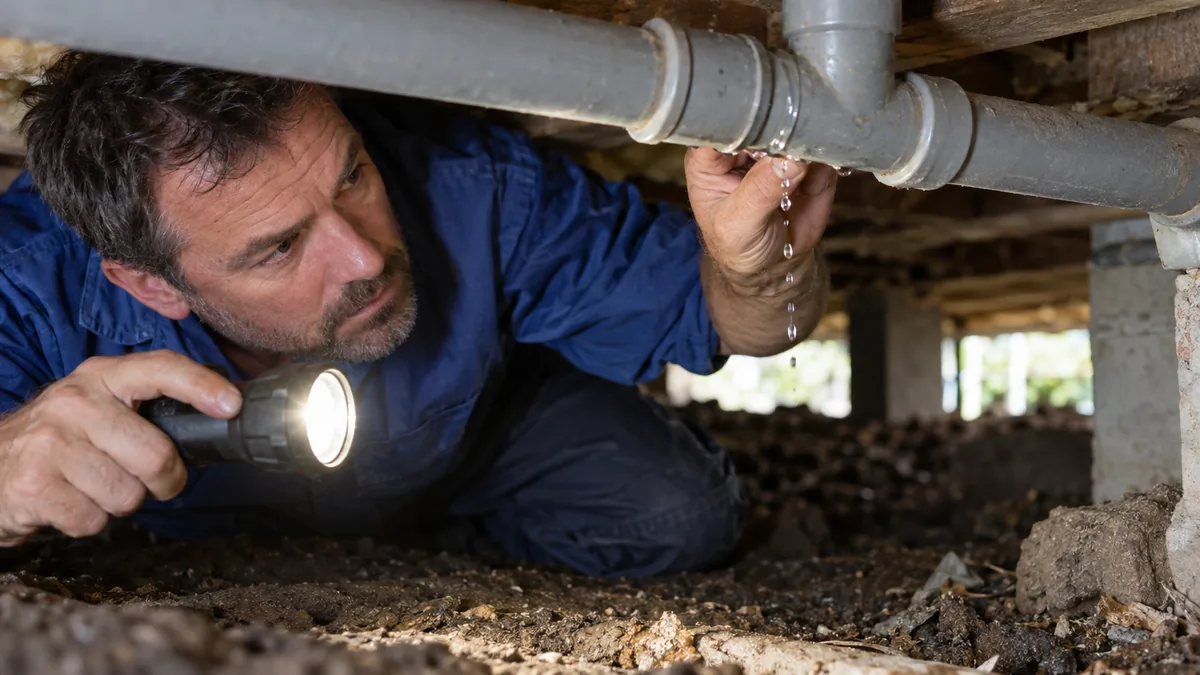
- a villa or state house on piles where the burst is under the floor and the plumber has to crawl in
- a leak inside a wall or a concrete slab that has to be found before it can be fixed (leak detection is a separate skill)
- an apartment in the CBD or Newmarket where the building manager has to isolate a riser and escort the plumber
- a steep section in Titirangi or on the North Shore where the toby is at the bottom of a long driveway
- basalt rock close to the surface on the central isthmus, which makes digging for a drain slow
Parts and materials
Fittings, pipe, a new element or thermostat, a replacement relief valve or a whole new hot water cylinder are charged on top of labour. A plumber carries common parts in the van. A specific cylinder size or a valve pack for a mains-pressure system may have to wait until the supplier opens.
Make it safe now, repair it properly later
This is the single biggest way to control an after-hours bill. For many emergencies the plumber can:
- isolate the damaged section so the rest of the house has water
- cap the pipe or fit a temporary repair
- make the power and the water safe around a failed cylinder
- quote the full repair for a normal weekday
That keeps the expensive after-hours part of the job short. It also gives you time to ring your insurer and, for bigger jobs such as re-piping a home with polybutylene grey pipe, to get a second quote if you want one. Ask for this option on the phone; a good plumber will offer it anyway.
What to ask on the phone
A short conversation before dispatch saves surprises later. Have these questions ready:
- How is the call-out charged, and what is the hourly rate at this time of day?
- How is travel charged to my suburb?
- Will I get a quote for the repair before work starts?
- If the job turns out bigger, will you stop and re-quote before carrying on?
- Can you make it safe tonight and do the full job during the day?
- Is the person coming a licensed plumber (or a gasfitter, for gas work)?
- Will I get a written invoice or report that I can give to my insurer?
And give the plumber the details they need to price it honestly: your suburb, what has failed, whether the water is off at the toby, whether water has reached the power, how old the house is, and any access issues such as a gate code, a lift or a steep driveway. If you are not sure the water is off, read what to do when a pipe bursts while you wait.
Checking the plumber is licensed
In New Zealand, plumbing, gasfitting and drainlaying are restricted work under the Plumbers, Gasfitters, and Drainlayers Act 2006. Only people authorised by the Plumbers, Gasfitters and Drainlayers Board (PGDB) can do it. An authorised tradesperson carries a PGDB photo ID card, and you can check a name on the PGDB public register online. Unlicensed work can cause problems with insurance and when you sell, so it is not a place to save money.
How insurance usually works (in general terms)
Every policy is different, so this is not advice about yours. In general:
- Many home policies respond to sudden and accidental water damage, such as a burst pipe soaking a floor or ceiling.
- The worn part that failed, such as an old pipe, a flexi hose or a cylinder at the end of its life, is often not covered.
- Damage from a slow leak that went on for a long time is treated differently from a sudden burst.
- An excess usually applies.
What helps with any claim: photos taken before the clean-up, the failed part kept in a bag, and a written report from the plumber stating the cause, the location and the repair. Ring your insurer before booking non-urgent follow-up work, because some insurers want to use their own tradespeople or approve the quote first.
When the job can wait until morning
Some problems are genuine emergencies. Others can safely wait for a weekday booking at a normal rate. Ring straight away when:
- water is running and you cannot stop it at the toby or a fixture valve
- water is near the switchboard, light fittings or power points
- sewage is coming up through a gully trap, shower or toilet
- a hot water cylinder is leaking heavily or the relief valve will not stop running
- you smell gas (leave the house, and ring 111 from outside if the smell is strong)
It can usually wait when:
- a tap is dripping, or a toilet is running but not overflowing
- one fixture has failed and you can shut off its own valve and use another bathroom
- the hot water is off but nothing is leaking and nobody in the house depends on it for medical reasons
- a drain is slow but still draining
If the water is off and nothing is getting worse, a morning booking is usually the cheaper choice. The 24 hour emergency plumber page explains how an urgent call is handled, and the North Shore and West Auckland pages cover what usually fails in homes in those parts of the city.
Why this site shows no prices
A blocked drain in a new Takanini townhouse and a root-filled earthenware drain under a pōhutukawa in Devonport are not the same job, and neither are a flexi hose in an apartment and a burst galvanised pipe under a Mt Eden villa. Any single figure would mislead someone. What you can rely on is this: the call-out and hourly rate are explained before anyone is dispatched, and the repair is quoted before work starts.