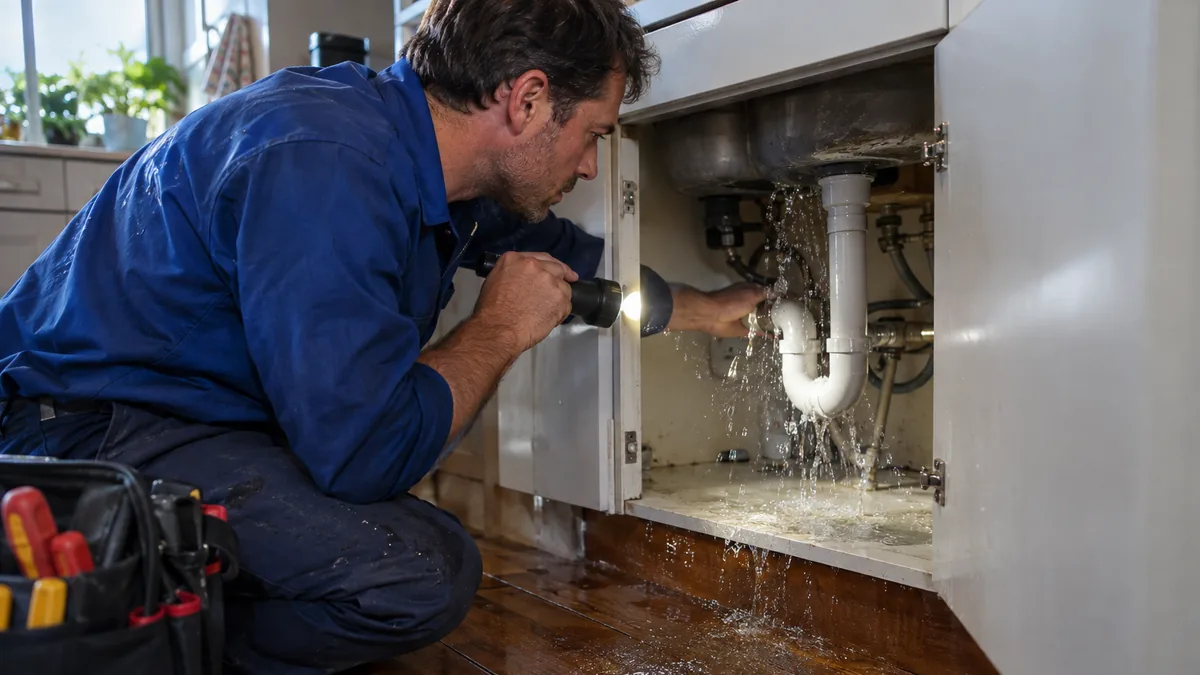
Walk under a 1980s house in Glenfield, look behind the vanity in a 1990s townhouse in Botany Downs, or lift a ceiling hatch in an early 2000s home in West Harbour, and there is a good chance you will find grey plastic water pipe. Much of it is polybutylene. It was widely used in New Zealand homes from the 1980s into the early 2000s, and many Auckland homes of that era still have it. The pipe and its fittings are prone to sudden failure, which is why it comes up so often in pre-purchase reports and insurance conversations.
This guide explains how to identify it, why it fails, and how to decide whether to replace it. It is general information, not a verdict on any particular product or installation.
What polybutylene pipe looks like
Polybutylene is a flexible plastic pipe, most often grey in New Zealand homes. You will usually find it:
- under the kitchen sink and bathroom vanities, coming out of the wall or floor
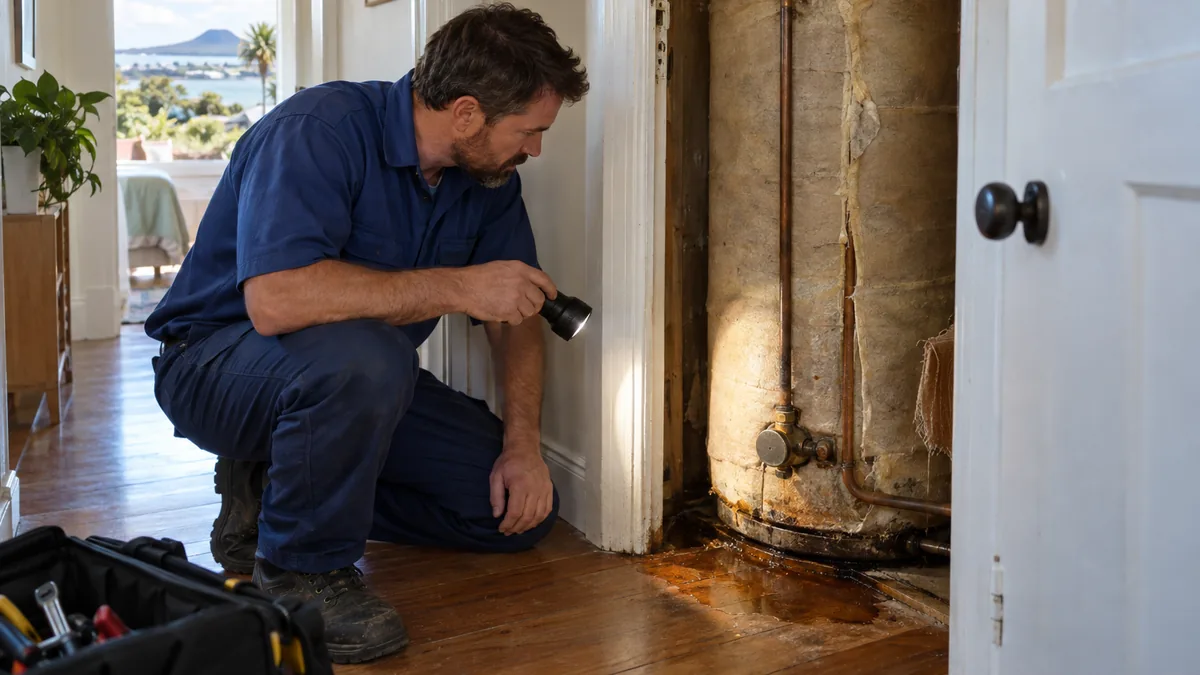
- at the hot water cylinder, connected to the valves
- in the ceiling space, running between rooms
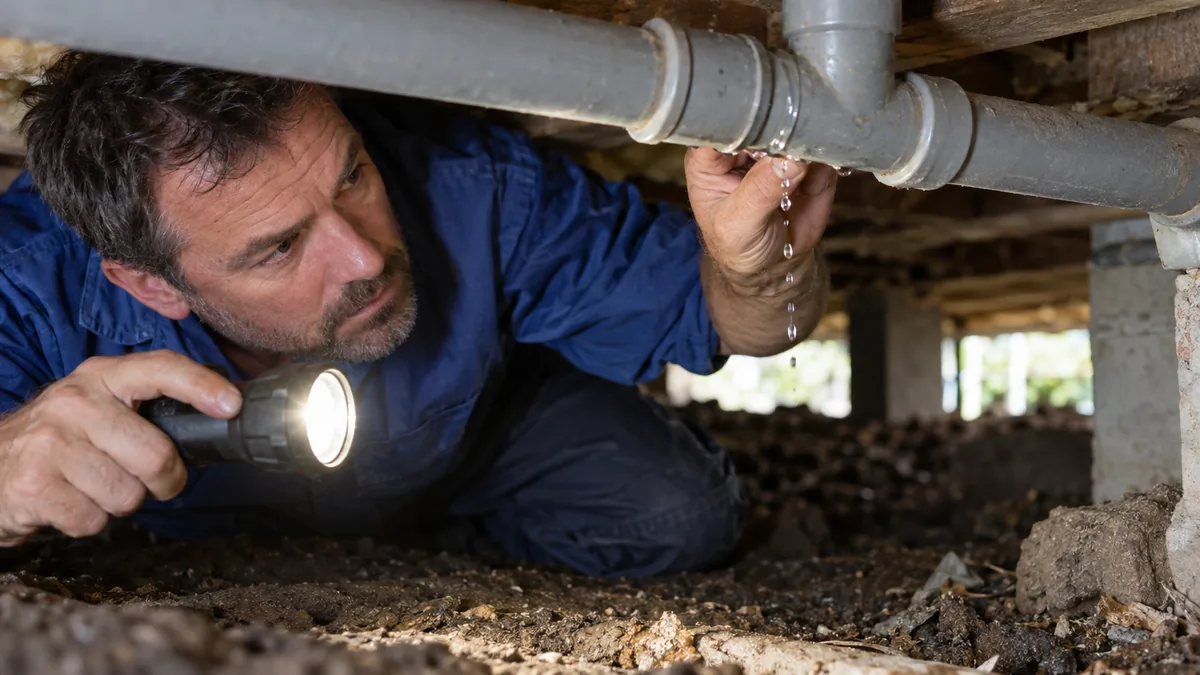
- under the house, on homes built on piles
- at the toby end, where the supply comes into the property
It is typically joined with push-fit or crimped fittings, which may be plastic or metal. The pipe itself may have printing along its length that identifies the material.
Two cautions. First, not all grey plastic pipe is polybutylene; other plastics are also grey. Second, a house may have a mix: polybutylene in some rooms and newer PEX or copper where a kitchen or bathroom was renovated. A licensed plumber can tell you what you have.
Why it fails
Polybutylene does not usually fail along a long, straight run. Failures tend to happen at or near the fittings and joints. The factors most often linked to failure are:
- The fittings. Joints are the weak point. A fitting that was not installed correctly, or that has aged, can crack or let the pipe pull away.
- Chlorine. Treated drinking water contains chlorine, and over many years it is thought to contribute to the plastic becoming brittle from the inside.
- Heat. The hot side, especially near the cylinder, works harder than the cold side.
- Age. The pipe in most Auckland homes of that era is now decades old.
- Sunlight. Where pipe was left exposed outside or near a skylight, UV light degrades it.
- Installation. Tight bends, pipe pulled over sharp edges, poor support or clips that pinch can all create stress points.
- Pressure. High mains pressure without a pressure-limiting valve adds strain to every joint.
The real problem is that failure is often sudden. A joint can go from dry to spraying with little warning, and pipe inside a wall or ceiling can do a lot of damage before anyone notices.
Which Auckland homes are likely to have it
Age is a guide, not a certainty. Homes most likely to have polybutylene include:
- houses built from the 1980s into the early 2000s in suburbs that grew in those decades, such as parts of Glenfield, Albany, Botany Downs, Dannemora, Henderson, Massey and West Harbour
- plaster “monolithic” homes and townhouses from the 1990s and early 2000s, where pipes often run inside walls
- older villas, bungalows and state houses that were re-plumbed, extended or had a bathroom added in that period
Homes built from the 2010s onward normally use PEX or other modern pipe systems.
Signs your grey pipe is under stress
- small drips or damp patches at fittings under sinks or at the cylinder
- a pipe that looks discoloured, flaky or cracked near a joint
- a water bill that has crept up, or a meter at the toby that moves when every tap is off
- stains on ceilings or bulging plasterboard
- a previous repair where one fitting has already been replaced
If you see any of these, get it looked at. Leak detection can find hidden leaks in walls and ceilings before they turn into a burst.
Should you replace it?
There is no rule that says you must, and plenty of grey pipe systems are still working. It is a decision about risk and timing. Replacement makes more sense when:
- the pipe has already leaked or burst once
- pipes run inside walls, ceilings or under a slab where a failure would be hard to spot
- the house is empty for long periods, such as a rental between tenants or a holiday home
- you are renovating a kitchen or bathroom anyway and walls are open
- you are buying or selling and want certainty
- your insurer has asked about it
Full or staged re-pipe
A plumber can quote a full re-pipe, replacing all the grey pipe in one go, or a staged approach that starts with the highest-risk areas such as the hot water cylinder connections and pipe in the ceiling. Either way, the job is quoted before work starts. Modern replacement pipe is typically PEX or copper, and the plumber will explain which suits your house.
Planning a replacement on your terms is almost always easier and cheaper than an emergency repair at night. If a grey pipe joint has already let go, read what to do when a pipe bursts first, and ask the plumber to make it safe that night and quote the re-pipe for a weekday.
Reading a LIM or builder’s report
If you are buying in Auckland, two documents come up often:
- The LIM (Land Information Memorandum) is Auckland Council’s summary of what the council holds on the property: consents, code compliance certificates, and known hazards such as flooding. It will not usually tell you what pipe is inside the walls, but it can show when work was consented, which helps date alterations.
- A pre-purchase builder’s report may note the pipe materials the inspector could see, for example under sinks or in the ceiling space. It is limited to what was visible on the day.
If either document mentions grey pipe, or is silent and the house is from the right era, ask a licensed plumber to look before you commit.
Insurance, in general terms
Insurers differ. Some ask about pipe materials when you take out or renew a policy, and some treat gradual deterioration differently from sudden damage. Read your policy and ask your insurer directly. If you replace the pipe, keep the plumber’s invoice and any certification, because that record helps with insurance and when you sell.
Who can do the work
Plumbing is restricted work in New Zealand under the Plumbers, Gasfitters, and Drainlayers Act 2006. A re-pipe must be done by a plumber authorised by the Plumbers, Gasfitters and Drainlayers Board, and you can check a name on the PGDB public register online. The burst pipe repair page explains how an urgent failure is handled, and the call-out and hourly rate are explained before anyone is dispatched.