A burst pipe does most of its damage in the minutes before someone stops the water. In Auckland that can mean water spraying under the floor of a Ponsonby villa, a failed flexi hose flooding the unit below in a Takapuna apartment, or a split grey pipe in the ceiling of a 1990s Botany Downs home soaking the plasterboard. Once you have rung a plumber and been given an honest arrival time, what you do next decides how much of the house is wet when they arrive. Work through these steps in order.
Bursts in Auckland usually come from ageing galvanised steel, failed polybutylene fittings, worn flexi hoses, high mains pressure on older joints, and ground movement on clay slopes.
1. Turn the water off at the toby
The toby is the small box at the front boundary, usually in the berm, the footpath or at the edge of the driveway. Inside is the Watercare meter and a stop valve on the property side. To turn it off:
- Lift the lid (a screwdriver helps to lever it).
- Clear out dirt, leaves or the occasional spider.
- Turn the valve clockwise until it stops, or a quarter turn if it has a lever.
- Go inside and check a cold tap. If water still runs, you may have turned the wrong valve.
Things that catch Aucklanders out:
- Shared tobies. Subdivided sections, back sections and some older state house streets share a toby or have several meters in one box. Check which valve is yours. If you have to turn off a shared supply, tell the neighbours.
- Buried or hidden tobies. Lawn, gravel or a new driveway sometimes covers the lid. It is normally in line with where the pipe enters the house.
- Seized valves. Old valves in villas and state houses can be stiff or rusted. Do not force one with a pipe or a wrench. Look for a second valve at the house, under the kitchen sink, beside the hot water cylinder or in the laundry, and tell the plumber the toby valve is seized.
In an apartment or terrace there may be no toby you can reach. Look for the unit’s isolation valve in a cupboard, under the kitchen sink or behind an access panel, and ring the building manager or body corporate if you cannot find it.
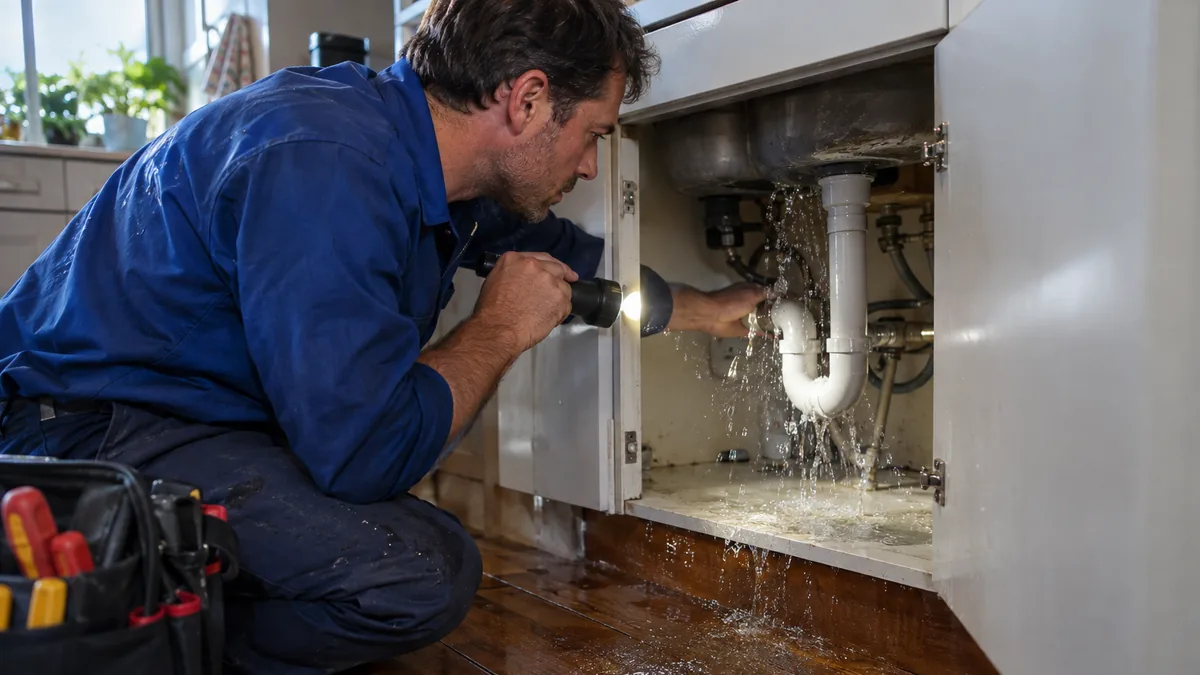
If the burst is at one fixture, such as a flexi hose under a vanity or the connection behind a toilet, the small isolating valve on that fixture stops it and the rest of the house stays on.
2. Drain the pressure
With the supply off, open the lowest cold tap in the house or a garden tap and leave it running. The pipework is still full of water under pressure, and the burst keeps spraying until that pressure has gone.
Low-pressure homes with a header tank
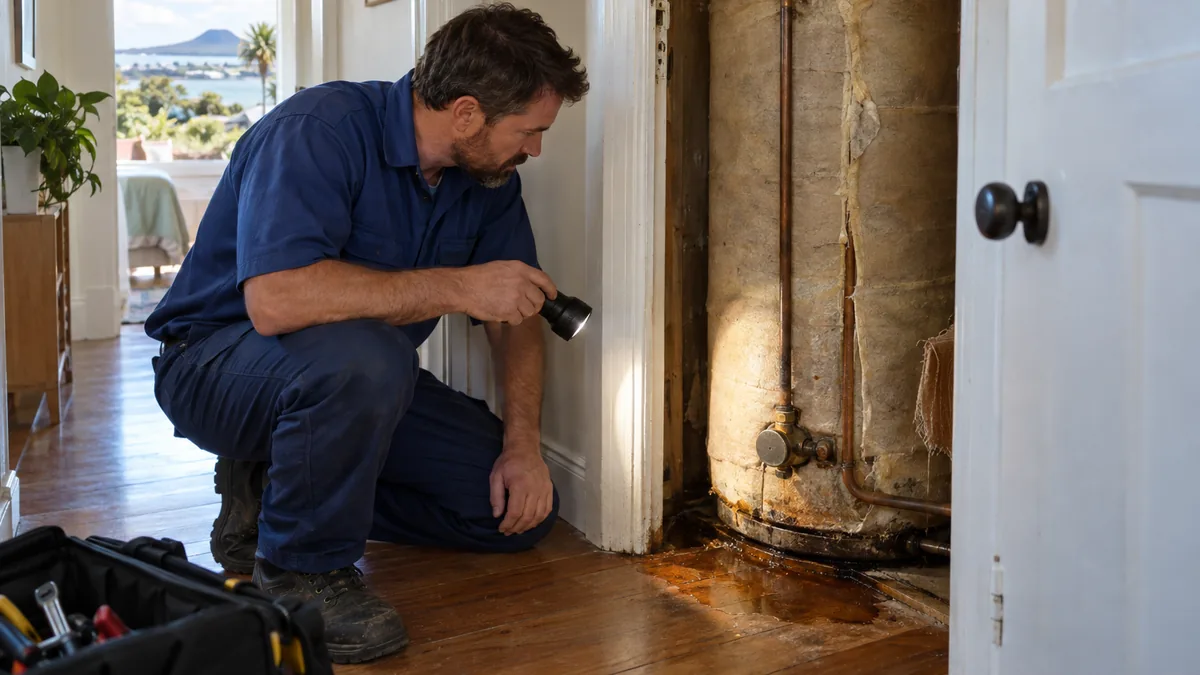
Many older Auckland homes, especially villas and bungalows on the isthmus and in Devonport, Onehunga and Birkenhead, have a low-pressure hot water cylinder fed from a header tank in the ceiling. Turning off the toby stops the header tank refilling, but the tank and the cylinder can keep feeding a burst on the hot side. Open the hot taps to empty the system faster, and watch the ceiling under the tank. If the burst is on the hot side and the cylinder is electric, switch its circuit off at the switchboard so the element does not run with too little water around it.
3. Make the power safe
If water is coming through a light fitting, running down a wall with power points, or pooling near the switchboard or an appliance, switch the power off at the main switch before you touch anything in that area. Do not stand in water to reach the switchboard. If the water is well away from electricity, leave the power on so you have lights and can run fans later.
If you smell gas at any point, stop, open doors, turn off at the gas meter or LPG bottle if it is safe to do so, get everyone out and ring 111 from outside if the smell is strong.
4. Protect ceilings, floors and the unit below
- Move furniture, rugs, electronics and anything valuable out of the wet area.
- Lift the edge of wet carpet so the underlay can start to drain.
- Put a bucket under ceiling drips. Stay out from under a sagging ceiling.
- Lay rolled towels across doorways to slow the spread.
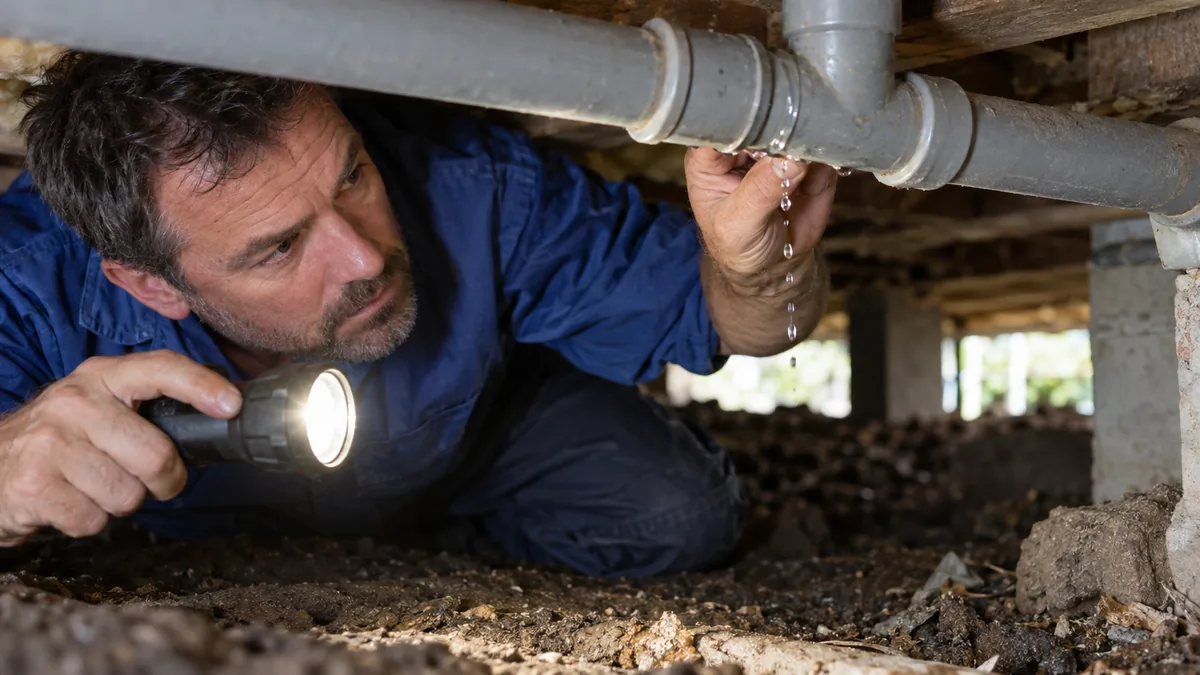
- In a house on piles, remember the water is also going under the floor.
In an apartment or townhouse, assume the water has reached the unit below. Knock on the door or ring the building manager so they can protect their things and photograph their side.
5. Photograph everything for insurance
Before anyone mops up, take photos and short videos of:
- the burst itself and where it is
- water on floors, walls and ceilings
- damaged belongings, with a wide shot and close-ups
- the meter reading at the toby
When the plumber cuts out the failed section or replaces the hose, ask to keep the old part. Photos, the part and the plumber’s written report stating the cause, the location and the repair help with an insurance claim. Ring your insurer early if the damage is large; some policies include drying.
6. Give the plumber the right details
When you ring, say:
- your suburb and street, and any gate code or access notes
- whether the water is off at the toby, and whether the valve was seized
- where the water is coming from, and whether it is clean water or waste
- whether it is a low-pressure or mains-pressure hot water system, if you know
- the age and type of the house (villa, state house, 1990s plaster, apartment)
- whether water has reached the power or a neighbour
That lets the plumber explain the call-out and hourly rate before anyone is dispatched, bring the right fittings and give you an honest arrival time. The burst pipe repair page explains what happens on arrival. If you are weighing up an after-hours callout, how much an emergency plumber costs in Auckland explains what drives the price.
Who is responsible: Watercare or the owner?
Watercare, Auckland Council’s water organisation, owns the public water network and the meter. The property owner is responsible for the pipes on the property side of the meter, from the point of supply (normally at or near the front boundary) to the house and everything inside.
- Water leaking from the meter itself or from the street: report it to Watercare.
- Water leaking between the toby and the house, or inside the house: that is yours, and it needs a licensed plumber.
A leak on your side that you cannot see will also show up on your water bill. If the meter keeps turning with every tap off, leak detection can find it before it becomes a burst.
After the burst: stop it happening again
- Replace flexi hoses under sinks, vanities and toilets before they fail, not after.
- If the house has grey polybutylene pipe, get it assessed and plan to replace it.
- Old galvanised pipe in villas and state houses in places like Mount Albert rusts from the inside; falling pressure is the warning sign.
- On clay slopes on the North Shore and in West Auckland, a buried supply pipe can crack where the ground moves after heavy rain.
- Learn where your toby is and test that the valve turns, on a dry day.