Blocked Drains
Overflowing gully traps, roots in old clay drains, blocked toilets and shared drains. Cleared, camera-checked if needed, quoted first.
Read More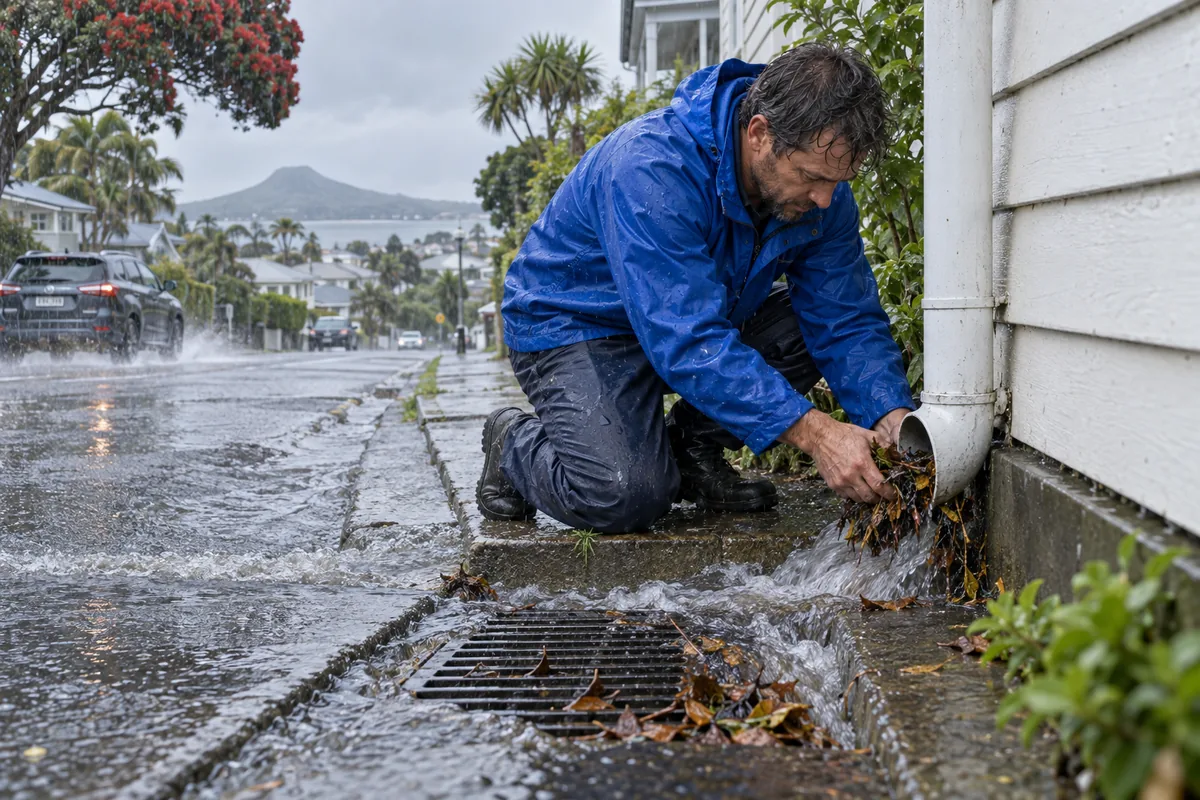
A licensed plumber for burst pipes, blocked drains and cylinder failures from Ōtāhuhu to Papakura, with the rate explained before anyone is sent.
South Auckland covers Ōtāhuhu, Māngere, Papatoetoe, Manukau, Manurewa, Takanini and Papakura, the suburbs along Great South Road and the Southern Motorway from the Tāmaki estuary down to the Pahurehure Inlet. Much of the housing is 1940s to 1970s state and group housing on piles, now often subdivided with infill units that share old drains. Around Manukau there is a busy commercial centre, and Takanini and the edges of Papakura are covered in terraces and townhouses built in the last fifteen years. The mix means galvanised pipe and clay drains in one street and PEX, shared drains and mains-pressure cylinders in the next.
A large share of South Auckland's homes are state and group houses built from the 1940s to the 1970s. In Ōtāhuhu, Māngere and Papatoetoe that usually means a weatherboard house on piles with galvanised steel water pipes, a low-pressure copper cylinder, and earthenware drains running out to the gully trap and the public sewer. Galvanised pipe corrodes from the inside, so pressure drops over the years and then a section rusts through. Clay drains crack at the joints as the ground moves and as tree roots get in.
Many of those sections have since been subdivided. A back unit or two townhouses built behind the original house often connect into the old drain, which means one blockage can stop two or three households at once, and it is not always clear whose pipe it is. At the other end of the scale, Takanini and parts of Papakura are covered in terraces and townhouses built since the 2010s, with PEX pipe, mains-pressure cylinders, shared walls and drains that run under neighbouring units.
Burst pipes are the most urgent. In older homes it is usually a rusted galvanised section or a joint under the floor, and in newer terraces it is more often a split flexi hose under a sink or vanity, or a failed PEX fitting. In attached housing the water does not stay in your unit for long, so turning it off early matters.
Blocked drains are just as common, often in the shared lines behind subdivided sections. When the main drain blocks, wastewater comes back up through the lowest point, which is usually the gully trap outside or a shower in the house. Large households also mean hot water cylinders work hard, and a burnt-out element, a failed thermostat or a relief valve running constantly can leave a whole family without hot water.
Heavy rain is the other trigger. In the January 2023 Auckland Anniversary Weekend storm and again in May 2023, stormwater and wastewater systems across the city were overwhelmed, and low-lying South Auckland streets saw gully traps overflow and yards flood.
For a burst pipe, find the toby at the front boundary. It is a small box in the berm or footpath holding the Watercare meter and a stop valve. Turn the valve a quarter turn so it sits across the pipe. On older subdivided sections the toby may be shared with the house behind, or the valve may be stiff or buried, so if it will not move, do not force it. Switch the hot water cylinder off at the switchboard so the element does not run dry, and move anything valuable away from the water.
If a drain is blocked, stop running water in the house and let your neighbours know if you share the line. Keep children away from any overflowing gully trap. If you smell gas, do not touch switches or light anything, open the doors, turn off at the meter or LPG bottle if it is safe, go outside and ring 111 if the smell is strong. Take photos of the damage before cleaning up; photos and a written report help with an insurance claim or a conversation with your landlord.
South Auckland is long rather than wide, and most travel runs north to south along the Southern Motorway and Great South Road. Ōtāhuhu and Papatoetoe are close to the motorway, Māngere is reached along SH20 and past the airport, and Manurewa, Takanini and Papakura are further south where the motorway and Great South Road can both be slow at peak hour. The morning and evening motorway traffic through the Manukau and Papatoetoe interchanges makes a real difference.
That is why you are not promised a set number of minutes. When you ring, you are given an honest arrival time based on where the plumber is and what the roads are like at that moment.
You ring and explain the problem. A few questions help the plumber bring the right gear, whether that is pipe and fittings, cylinder parts, or a drain machine and camera for a shared line. The call-out and hourly rate are explained before anyone is dispatched. If the job can safely wait until the morning, you are told that honestly.
When the plumber arrives, the first job is to make the property safe and stop any damage. The cause is found and explained, and the repair is quoted before work starts. Tenants are welcome to ring; the plumber can give you a written report to pass to your landlord or property manager. The plumber is licensed with the Plumbers, Gasfitters and Drainlayers Board, and you can check the name on the PGDB public register.
South Auckland grew fastest after the Second World War, when state housing spread through Ōtāhuhu, Papatoetoe and Māngere, and again in the 1960s and 1970s as Manurewa and Papakura filled in and Manukau was planned as a new city centre. Much of that housing is weatherboard on piles with galvanised pipe and clay drains, and many sections now carry two or three dwellings sharing one drain line. Households tend to be larger than the Auckland average, which puts real load on cylinders, toilets and drains. Takanini and the edges of Papakura are the newer face of the area, with terraces and townhouses built since the 2010s. The area includes Auckland Airport, Middlemore Hospital, Westfield Manukau and Rainbow's End, and travel runs on the Southern Motorway, SH20, Great South Road and the rail line to Papakura.
Overflowing gully traps, roots in old clay drains, blocked toilets and shared drains. Cleared, camera-checked if needed, quoted first.
Read MoreGrey pipe fittings, rusted galvanised, split flexi hoses and broken lines under the lawn. Water off, leak found, repair quoted first.
Read MoreNo hot water, a leaking cylinder or a relief valve that will not stop running. Diagnosed, made safe and repaired or replaced, quoted first.
Read MoreOverflowing gully traps, sewage backing up, blocked downpipes and stormwater drains after heavy rain, found and fixed across Auckland.
Read MoreTell us what is leaking, blocked or not working and which suburb you are in. You are talked through making it safe first.
Turn the water off at the toby or the isolation valve, and the power off if water is near wiring, while help is arranged.
The call-out and hourly rate are explained before anyone is dispatched, and you are given an honest arrival time.
The plumber finds the cause, quotes the repair before work starts, and fixes it or makes it safe until parts arrive.
The system is tested with the water back on, and you get photos and a written note of what was found and done.
Turn it off at the toby, then get a licensed Auckland plumber on the way. The rate is explained before anyone is dispatched.