Skip to content

Blocked Drains Auckland

Emergency unblocking for overflowing gully traps, root-choked earthenware drains, shared infill drains and blocked toilets

What's Included

Blocked Drains In Auckland

Overflowing gully traps, roots in old clay drains, blocked toilets and shared drains. Cleared, camera-checked if needed, quoted first.

  • Emergency unblocking of sewer drains, gully traps, toilets, showers, basins and kitchen sinks
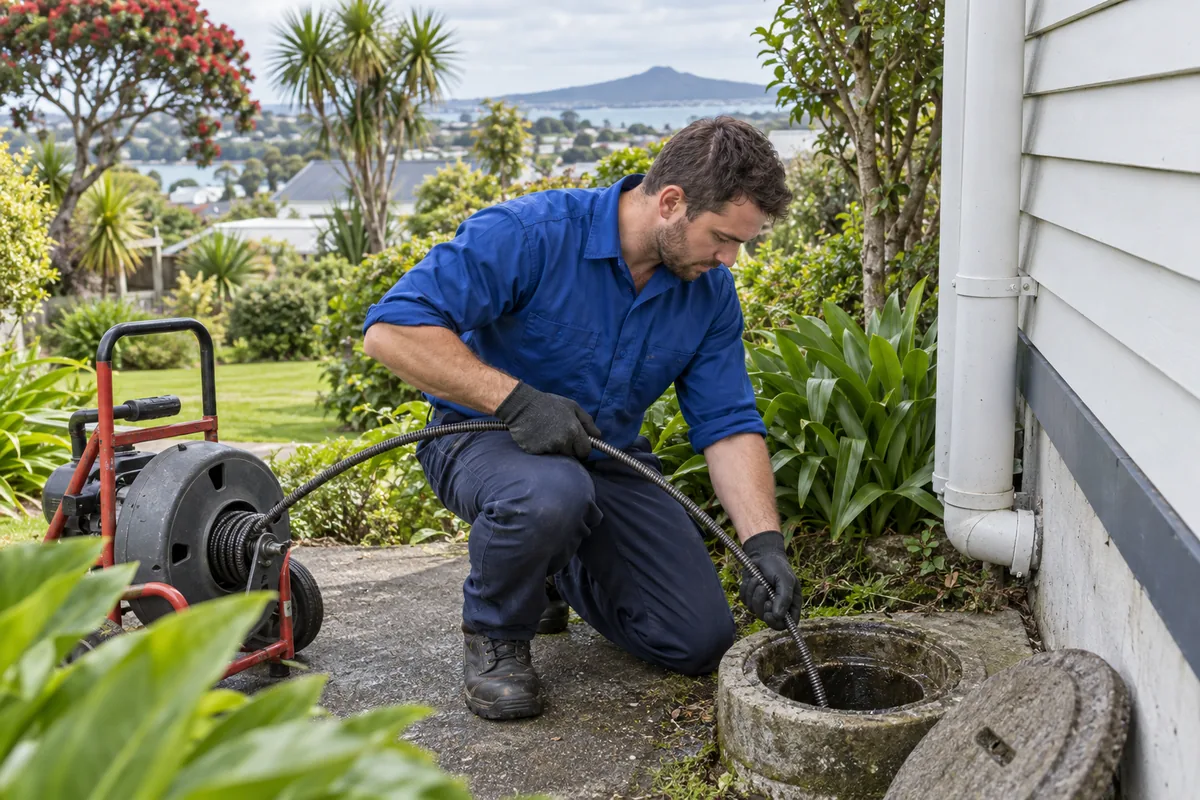
  • High-pressure water jetting to cut through fat, wet wipes, silt and tree roots
  • CCTV drain camera inspection to find cracks, root entry, sagging sections and broken joints
  • Tree roots cleared from old earthenware (clay) drains, with options to reline or replace the section
  • Shared drains on subdivided and infill sections traced to find where the blockage actually sits
  • Private stormwater drains, downpipes and sumps cleared after heavy rain
  • Written report and camera footage for your records, insurer or neighbours on a shared drain

Signs You Need To Call Now

  • Sewage or dirty water is coming up out of the gully trap outside
  • The shower, bath or floor waste fills with water when the toilet is flushed or the washing machine empties
  • The toilet water rises to the rim or drains away very slowly
  • Gurgling from drains and a sewer smell in the bathroom or laundry
  • Several fixtures are slow at once, not just one basin
  • Water pools around the gully trap or downpipes every time it rains

Blocked drains in Auckland usually announce themselves at the gully trap. That small grated trap outside the kitchen or laundry is set lower than everything inside the house so that when the drain blocks, the overflow happens in the garden rather than through your shower. If dirty water or sewage is welling up there, the drain downstream is blocked or the network is overloaded, and it needs attention before it finds another way out.

Why Auckland drains block

Tree roots in earthenware drains

Most homes built before about the 1970s have earthenware clay drains laid in short lengths with a joint at each end. That covers the villas and bungalows of Ponsonby, Grey Lynn, Mount Eden and Devonport, and the state houses of Mount Albert, Glen Innes, Ōtāhuhu, Māngere and New Lynn. Over decades the joints crack and shift, and roots from pōhutukawa, pūriri, oaks, plane trees, liquidambars, palms and bamboo move in. The roots trap paper and fat until the line closes completely, often after a wet spell when the roots have been growing hard.

Moving clay and hard rock

The North Shore and West Auckland sit largely on Waitematā clay, which swells in wet weather and shrinks in dry spells, and on sloping sections in Glen Eden, Titirangi, Birkenhead and Glenfield that movement can sag or break old drains. On the volcanic isthmus around Mount Eden, Epsom and Onehunga, basalt sits close to the surface, which makes any digging to replace a drain slower. That is one reason camera inspection and relining are often preferred over excavation.

Shared drains on subdivided sections

Across Auckland, state house and bungalow sections have been subdivided with townhouses built behind the original home, and many of those properties share a private drain. A blockage in a shared line can show up at the house that did nothing to cause it. Tracing the drain and filming it tells everyone where the problem is.

Rain and the combined network

In parts of the older central isthmus, including Herne Bay, Freemans Bay, Westmere and Point Chevalier, the public network carries wastewater and stormwater in the same pipes. In heavy rain it overloads and can push back up through the lowest gully trap on a property. The 27 January 2023 floods showed this across the city. Watercare’s Central Interceptor tunnel, running from Grey Lynn to the Māngere treatment plant, is designed to reduce those overflows. Storm-related drainage and flooding are covered under storm and flood plumbing.

What goes down the drain

Wet wipes, fat, cooking oil, sanitary products and coffee grounds cause a large share of blockages in apartments and townhouses, especially on shared drains in newer developments at Flat Bush, Takanini and Hobsonville.

What to do before the plumber arrives

  • Stop using water. Every flush, shower or washing machine cycle adds to the overflow.
  • Keep children and pets away from the gully trap and any sewage.
  • Do not lift a manhole lid in the street or try to work on the public sewer.
  • If the blocked toilet is the only one, do not keep flushing to test it.
  • Take photos of any overflow, particularly if it has come inside, because photos help with an insurance claim.

Chemical drain cleaners rarely clear a real blockage in a sewer drain and can make the plumber’s job harder.

How an emergency unblock is done

The plumber starts at the gully trap and any inspection points to work out whether the blockage is in a fixture, in your private drain, in a shared drain or in the public sewer. That matters, because Watercare is responsible for the public wastewater network while you are responsible for your private drains up to where they join it. If the fault is on the public side, you are told so and advised to report it to Watercare.

Once the cause and the fix are explained and quoted, most blockages are cleared with a high-pressure water jetter or a drain machine. Jetting cuts through fat and roots and flushes the debris away. The line is then run with water to confirm it drains freely.

If the drain keeps blocking, or roots are found, a CCTV camera is sent down to film the inside of the pipe. You see the cracked joints, root entry points or sagging sections yourself, and get a written report. Options range from regular maintenance jetting to relining the damaged length or replacing a section, which is drainlaying work done by an authorised drainlayer.

When it is not an emergency

A single slow basin, a shower that drains a little slowly, or a sink you can go without overnight can usually wait for a daytime visit. A blocked sewer drain, an overflowing gully trap, sewage inside the house, or a blocked toilet when it is the only one should be handled now by the 24 hour emergency plumber. If you are in the west, the West Auckland page covers local drain issues in more detail.

How It Works

The Job, Step By Step

01

Call

Describe what is overflowing and where. You are told the call-out and hourly rate before dispatch, and asked to stop using water in the house so the blockage does not get worse.

02

Find the blockage

The plumber checks the gully trap and inspection points to work out whether the blockage is in a fixture, your private drain, a shared drain or the public sewer.

03

Quote and clear

The fix is explained and priced before work starts. Most blockages are cleared with a jetter or a drain machine, and the line is flushed to confirm it runs freely.

04

Camera and report

If roots, cracks or a recurring blockage are suspected, the drain is filmed so you can see the cause, with options for relining or replacing the damaged section.

FAQ

Blocked Drains Questions

Why is sewage coming out of my gully trap?
The gully trap is the grated trap outside, usually near the kitchen or laundry, where waste pipes discharge into the sewer drain. It is set lower than the fixtures inside so that if the drain blocks, it overflows outside instead of through your shower. Sewage coming out of it means the drain downstream is blocked, commonly by tree roots, fat or wet wipes. In heavy rain, especially in older combined-network suburbs, it can also mean the public network is overloaded. The plumber will work out which it is before anything else is done.
Do you offer emergency unblocking at night and on weekends?
Yes. A blocked sewer drain, an overflowing gully trap or a blocked toilet in a house with only one is treated as an emergency, and emergency unblock plumbers work across Auckland at night, on weekends and on public holidays. The after-hours rate is explained on the phone before anyone is sent. If the problem is a single slow basin or a sink you can live without until morning, you will be told honestly and offered a daytime booking, which costs less than an after-hours visit.
Why do tree roots get into Auckland drains?
Most homes built before the 1970s, including the villas of Ponsonby and Mount Eden and the state houses of Mount Albert, Ōtāhuhu and New Lynn, have earthenware clay drains with joints every short length. Over time those joints crack or shift, and roots from pōhutukawa, pūriri, oaks, liquidambars, palms and bamboo find the moisture and grow inside. The roots catch paper and fat until the drain blocks. Jetting cuts them out, but they grow back, so a camera inspection is used to decide whether relining or replacing the damaged section is worth doing.
Who is responsible for a blocked drain, me or Watercare?
Watercare owns and maintains the public wastewater network. The property owner is responsible for private drains on the section, up to the point where they connect to the public sewer. If the plumber finds the blockage is in the public sewer, or your drain is clear and the network itself is backing up, you are told so and advised to report it to Watercare rather than being charged to chase a problem that is not yours. Private stormwater pipes, downpipes and soakholes on the section also belong to the owner.
We share a drain with the neighbours. Who pays to unblock it?
Shared private drains are common in Auckland, particularly where state house and bungalow sections have been subdivided and townhouses built at the back, in suburbs such as Mount Albert, Papatoetoe, Glen Innes and Northcote. Responsibility for a shared private drain generally sits with the owners who use it, and the details may be in your property title or cross-lease documents. This site does not give legal advice. What the plumber can do is locate the blockage, film the drain and provide a written report, which gives everyone the same facts to work from.
Why do my drains back up every time it rains heavily?
In older inner suburbs such as Ponsonby, Grey Lynn, Herne Bay, Freemans Bay, Westmere and Point Chevalier, parts of the network carry wastewater and stormwater in the same pipes, and heavy rain overloads them. Elsewhere, cracked drains let groundwater in, or downpipes are wrongly connected to the sewer. Watercare's Central Interceptor tunnel is designed to cut combined-network overflows. On your own property, a camera inspection finds cracks and wrong connections, and the plumber can advise whether a fitting such as a backflow device suits your situation.
What should I not put down the drain?
Wet wipes, even those labelled flushable, are one of the most common causes of blockages in Auckland drains, along with fat, oil and grease poured down the kitchen sink, sanitary products, cotton buds and coffee grounds. In a townhouse or apartment block on a shared drain, what one household flushes affects everyone downstream. Scrape plates into the bin, let fat cool and bin it, and keep a strainer in the kitchen sink and the shower. If a drain is already slow, chemical cleaners rarely fix a real blockage and can damage older pipes.

Water Where It Shouldn't Be?

Turn it off at the toby, then get a licensed Auckland plumber on the way. The rate is explained before anyone is dispatched.