Skip to content

Burst Pipe Repair Auckland

Polybutylene grey pipe, rusted galvanised, failed flexi hoses and cracked underground services, isolated and repaired

What's Included

Burst Pipe Repair In Auckland

Grey pipe fittings, rusted galvanised, split flexi hoses and broken lines under the lawn. Water off, leak found, repair quoted first.

  • Help turning the water off at the toby or the unit's isolating valve, then the burst located
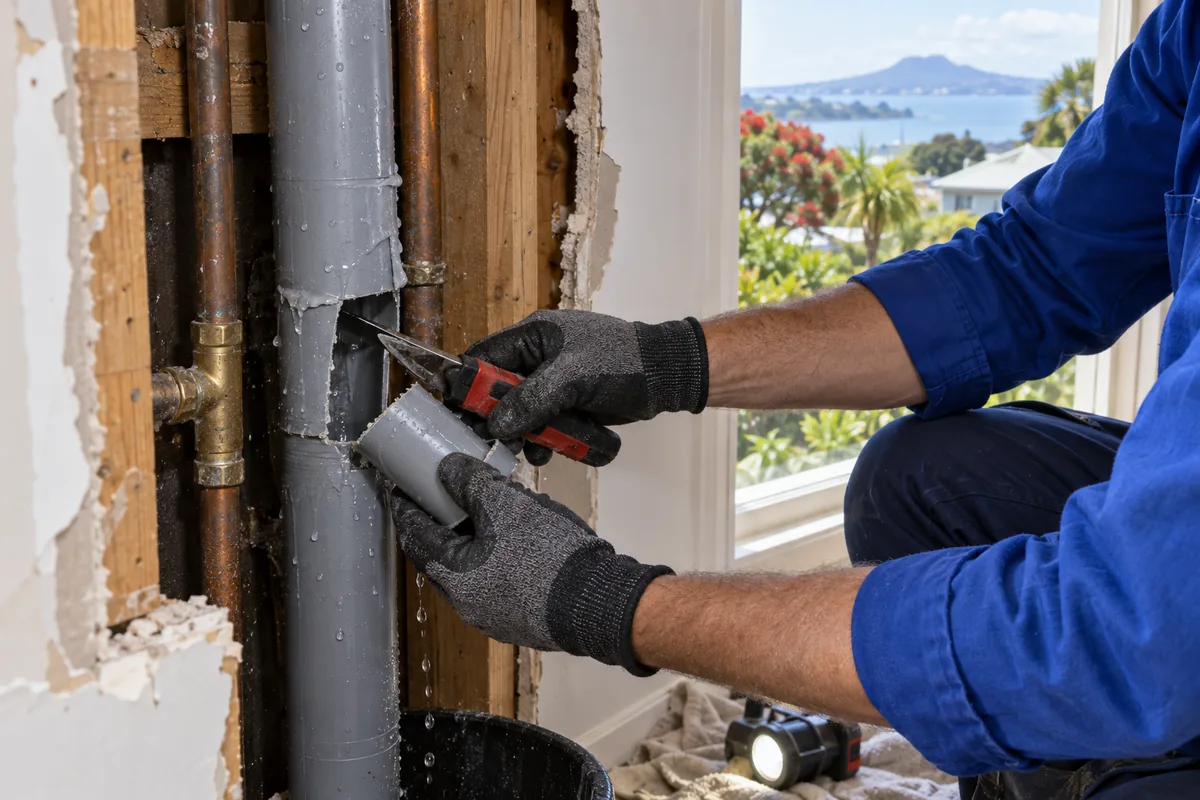
  • Failed polybutylene grey pipe fittings replaced, with advice on how much of the system is still grey pipe
  • Rusted galvanised pipe in villas, bungalows and state houses cut out and replaced in PEX or copper
  • Split flexi hoses under sinks, vanities, toilets and dishwashers replaced with new hoses and reachable isolating valves
  • Broken water services between the toby and the house found and replaced, including lines disturbed by clay movement
  • Pressure checked and a pressure-limiting valve recommended where high mains pressure keeps breaking fittings
  • Photos and a written report of the failed section for your insurer or body corporate

Signs You Need To Call Now

  • Water is spraying or running from a pipe, wall, ceiling or under a benchtop and will not stop
  • The meter in the toby keeps turning with every tap in the house closed
  • A wet patch, bubbling paint or a sagging ceiling that is getting bigger
  • A soggy strip of lawn or water bubbling up between the toby and the house
  • Water pressure has dropped at every tap at once
  • Hissing behind a wall or under the floor when nothing is running
  • Water coming through the ceiling of the apartment or townhouse below

Burst pipes in Auckland have nothing to do with frost. Pipes here do not freeze. What bursts is a polybutylene fitting in a 1980s Glenfield home, a rusted galvanised line in a Grey Lynn villa, a split flexi hose in a Hobsonville Point townhouse, or a water service between the toby and the house that has been pulled apart by moving clay. Each has a different cause and a different fix, and the first step is always the same: stop the water.

First, turn the water off at the toby

The toby is the small box at the front boundary, in the berm or footpath, that holds the Watercare meter and the stop valve. Lift the lid, turn the valve clockwise until it stops, then open a low tap inside the house to drain the pressure from the pipes. If you live in an apartment or a newer townhouse, look for an isolating valve for your unit in a cupboard, behind the washing machine, under the kitchen sink or in a service riser in the corridor.

On older streets the toby is not always easy. It can be buried under turf in Mount Albert, seized after decades of never being touched in Onehunga, or shared between two or three properties on a subdivided state house section. If the valve will not turn, do not force it, because Watercare owns the meter. You will be talked through the alternatives on the phone. The full step-by-step guide is what to do when a pipe bursts.

Then turn off the hot water cylinder at the switchboard if the burst is anywhere near it, and move valuables and electrical items away from the water.

Why pipes burst in Auckland homes

Polybutylene grey pipe

Polybutylene was widely used in New Zealand homes from the 1980s into the early 2000s, so a large share of Auckland houses from that period still have it. It and its fittings are prone to sudden failure, and a failure usually shows up as water through a ceiling or a wet carpet rather than a slow drip. After a grey pipe fitting lets go, the plumber repairs the failure and shows you how much of the house is still on grey pipe. More on identifying it is in the polybutylene grey pipe guide.

Galvanised steel in villas and state houses

Villas and bungalows in Grey Lynn, Ponsonby, Mount Eden and Devonport, and state houses in Mount Albert, Te Atatū, Ōtāhuhu and Māngere, were originally plumbed in galvanised steel. After many decades the pipe rusts from the inside, narrows and finally splits at a thread or elbow. Renovations have often joined copper or plastic onto the old galvanised, and those joints are common failure points. A burst in galvanised is rarely a one-off, so replacing the whole affected run in PEX or copper while the wall or floor is open is usually the better value.

Flexi hoses in apartments and townhouses

Braided flexi hoses under sinks, vanities and toilets fail quietly and then all at once. In the apartments of the CBD, Newmarket and Onehunga, and the terraces of Albany, Takanini and Flat Bush, a split hose runs at mains pressure into the floor framing or the unit below. Replacement hoses should be good quality and paired with an isolating valve you can reach.

Moving ground under the section

The North Shore and West Auckland sit largely on Waitematā clay that swells and shrinks, and on sloping sections it can move after heavy rain. That movement cracks rigid pipe and pulls joints apart between the toby and the house. A soggy strip of lawn, water bubbling up through a path, or a meter that keeps turning when nothing is on are the clues. Leak detection finds these without digging up the whole section.

How a burst pipe is repaired

The plumber first confirms the water is isolated, then finds the actual failure, which is often some distance from where the water shows up. Moisture readings and a pressure test narrow it down before any lining or floor is cut. The repair is explained and quoted before work starts. The failed section is cut out and replaced, the water is turned back on, and the system is checked under pressure. If mains pressure is high enough to keep breaking fittings, a pressure-limiting valve is recommended.

The plumber is authorised by the Plumbers, Gasfitters and Drainlayers Board, carries the PGDB photo ID card, and can be checked on the public register. Photos and a written report of the failed section are provided, which help with an insurance or body corporate claim.

When it is not an emergency

A small weep at a tap connection that you can isolate with the valve under the basin, or a drip you can catch in a bucket, can usually wait for a daytime booking. Anything that is still running after you have closed the nearest valve, or anything coming through a ceiling, is worth a call to the 24 hour emergency plumber now.

How It Works

The Job, Step By Step

01

Call and isolate

You are talked through turning the water off at the toby or the isolating valve while the plumber is on the way, and told the call-out and hourly rate before dispatch.

02

Locate

The plumber finds the burst, which is often not where the water appears. Pressure testing and moisture readings narrow it down before any lining, floor or lawn is opened.

03

Quote

The repair is explained and priced before work starts, including whether one fitting is replaced or a longer run of grey pipe or galvanised should go while the wall is open.

04

Repair and test

The section is replaced, the water turned back on and the system checked under pressure, and the cause dealt with, whether that is a new flexi hose, a replaced run or a pressure-limiting valve.

FAQ

Burst Pipe Repair Questions

Where is my toby and how do I turn the water off?
The toby is a small box with a lift-up lid, set in the berm or footpath at the front boundary of most Auckland properties. Inside is the meter and a stop valve. Turn the valve clockwise until it stops, then open a low tap inside the house to drain the pressure. On older streets in villa and state house suburbs the toby can be hidden under grass, seized, or shared by two or more homes. Watercare owns the meter, so do not force a valve that will not move. You will be talked through alternatives on the phone.
Is the leak my responsibility or Watercare's?
Watercare owns the public water network, the water main in the street and the meter itself. The property owner is responsible for the pipes on the property side of the meter, which is the point of supply, normally at or near the front boundary. A leak at the meter or bubbling up in the street or footpath is reported to Watercare. A leak between the meter and the house, or anywhere inside, is the owner's to repair. If the plumber finds the fault is on Watercare's side, you are told so rather than quoted for it.
What is grey pipe and why does it burst?
Grey pipe is polybutylene, a flexible grey plastic water pipe widely used in New Zealand homes from the 1980s into the early 2000s. Many Auckland homes from that period, from Glenfield and Howick to Henderson and Manurewa, still have it. The pipe and particularly its fittings can fail suddenly, often at a joint behind a wall, under a floor or in the ceiling near the cylinder. When one fitting fails, the plumber will show you how much of the house is still grey pipe and quote for replacing it in stages or all at once, so you can plan rather than wait.
My villa has old galvanised pipes. Should I replace them?
Villas and bungalows in Ponsonby, Grey Lynn, Mount Eden, Devonport and Onehunga, and many state houses in Mount Albert, Te Atatū and Ōtāhuhu, were plumbed in galvanised steel. Over decades the inside rusts and narrows, which is why pressure at the kitchen tap is often weak, and the pipe eventually splits at a thread. Past renovations often joined copper or plastic to the old galvanised, and those joints are frequent failure points. A burst in galvanised is rarely the last one, so the usual advice is to replace the affected run now and plan the rest.
Why do flexi hoses fail in apartments and townhouses?
Braided flexible hoses connect taps, toilets and dishwashers in almost every modern Auckland apartment and townhouse, from the CBD and Newmarket to Albany, Hobsonville Point and Flat Bush. The stainless braid corrodes, often from cleaning products stored under the sink, the rubber liner inside perishes, and the hose splits at full mains pressure. In a multi-level building the water runs into the unit below before anyone notices. The repair replaces the hose with a quality one and an isolating valve you can reach. Replacing older hoses before they fail is cheap insurance.
Can the ground in Auckland break underground pipes?
Yes. Much of the North Shore and West Auckland sits on Waitematā clay that swells when wet and shrinks when dry, and on sloping sections it can creep or slip after heavy rain, as many properties found after the 2023 storms. That movement pulls on rigid pipes and old joints between the toby and the house. On the volcanic isthmus, basalt close to the surface makes digging slower. A broken underground service is found by pressure testing and moisture readings first, then replaced in a flexible material with as little digging as possible.
Will my insurance cover a burst pipe?
That depends on your policy, and this site does not give insurance advice. What helps any claim is evidence. The plumber can photograph the failed pipe or fitting, keep it if you want it, and provide a written report describing the cause and the repair. Photograph the water damage yourself before cleaning up, and let your insurer know early. In a body corporate building, tell the building manager too, because the question of who pays for damage to the unit below usually turns on what failed and where.

Water Where It Shouldn't Be?

Turn it off at the toby, then get a licensed Auckland plumber on the way. The rate is explained before anyone is dispatched.