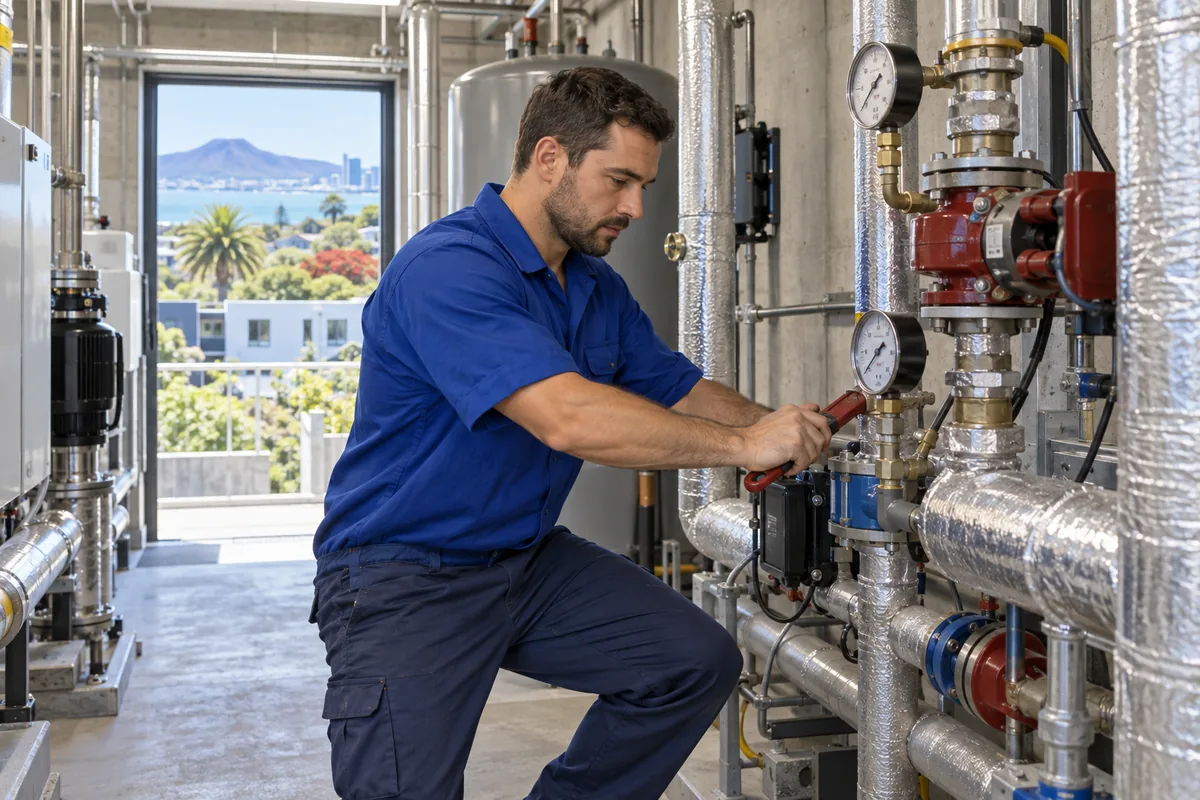
Commercial plumbing problems cost more than the repair. A blocked kitchen drain can close a restaurant for a night, a burst pipe in an office ceiling can shut a floor, and a leaking riser in an apartment block can affect every unit below it. Auckland’s commercial buildings range from century-old brick shops on Karangahape Road and Ponsonby Road to glass towers in the CBD, suburban retail centres and new mixed-use buildings in Newmarket, Albany and Hobsonville. The plumbing, and who is responsible for it, varies just as much.
Cafes, restaurants and food businesses
Commercial kitchens put fats, oils and grease down the drain every day, and grease is the most common cause of hospitality drain call-outs. Most food businesses are required to have a grease trap or grease interceptor, which separates grease from the waste water before it reaches the public network.
Grease traps and trade waste
In Auckland, Watercare manages trade waste, which is liquid waste from businesses going into the wastewater network, under its trade waste bylaw. The requirements depend on the premises and what they discharge, so check with Watercare for your own business. From a plumbing point of view, the problems are practical: traps that are overdue for a pump-out, traps too small for a kitchen that has grown busier, and pipes between the kitchen and the trap that coat with grease and block. A plumber clears the line, checks the trap and the pipework, and can advise whether the trap suits your current volume.
Offices and retail
Office and retail call-outs usually involve blocked toilets and urinals, leaking tapware and flexi hoses in tea rooms, failed hot water units and burst pipes above ceilings. Older buildings in the CBD, Newmarket and suburban centres often have galvanised or ageing copper pipes mixed with newer materials from earlier fit-outs, and a leak in one tenancy can come from pipework serving another. The first job is to isolate the right section so the rest of the building can keep going, then find the source. Our leak detection service locates hidden leaks without opening up more ceiling or wall than necessary.
Body corporate apartment and townhouse buildings
Auckland has a growing number of apartment buildings and townhouse complexes, from the CBD and Ponsonby to Hobsonville Point, Flat Bush and Albany. They share drains, risers, pumps and sometimes hot water plant. Failed flexi hoses and toilet inlet valves are a common cause of water coming through a ceiling into the unit below. Some basements rely on pumped sewer or stormwater systems, which need attention quickly when they fail. The plumber works with the building manager or body corporate to isolate the right riser, find the source and report in writing, which helps everyone work out responsibility afterwards.
Backflow prevention and the building warrant of fitness
Many commercial buildings have backflow prevention devices protecting the public water supply from contamination, for example on kitchens, fire sprinklers, irrigation or processes that use chemicals. Testable devices that are specified systems on a building’s compliance schedule need regular inspection, typically every year, and the results feed into the building warrant of fitness. A qualified tester checks each device and records the results, and a plumber repairs or replaces any device that fails. A device that is leaking or discharging water should be checked promptly rather than left until the next scheduled test.
What to do before the plumber arrives
- Isolate the water to the affected area if you know where the valve is, or at the main building valve if water is spreading.
- Keep people away from wet floors, water near electrics and any sewage.
- Stop using fixtures connected to a blocked drain, including dishwashers and glass washers.
- Tell the building manager or body corporate, and anyone in tenancies below.
- Take photos. Photos and a written report help with an insurance claim.
If you are not sure how to stop the water, our guide on what to do when a pipe bursts in Auckland explains the basics.
When it is not an emergency
A dripping tap in a staff kitchen, a slow washroom basin or a backflow test that is due next month can be booked in normal hours. Water coming through a ceiling, sewage in a kitchen or no hot water in premises that need it to trade are emergencies. For those, our 24 hour emergency plumber service is available across the city, and the call-out and hourly rate are explained before anyone is dispatched.