Skip to content

Emergency Gasfitter Auckland

Gas Leaks, LPG Bottles, Hobs and Continuous-Flow Hot Water Repaired by an Authorised Gasfitter, With Certification Where the Work Requires It

What's Included

Emergency Gasfitter In Auckland

Natural gas and LPG leaks, hobs and continuous-flow hot water repaired by an authorised gasfitter, and certified when the work requires it.

  • Leak finding and pressure testing of gas pipework from the meter or LPG bottles to every appliance
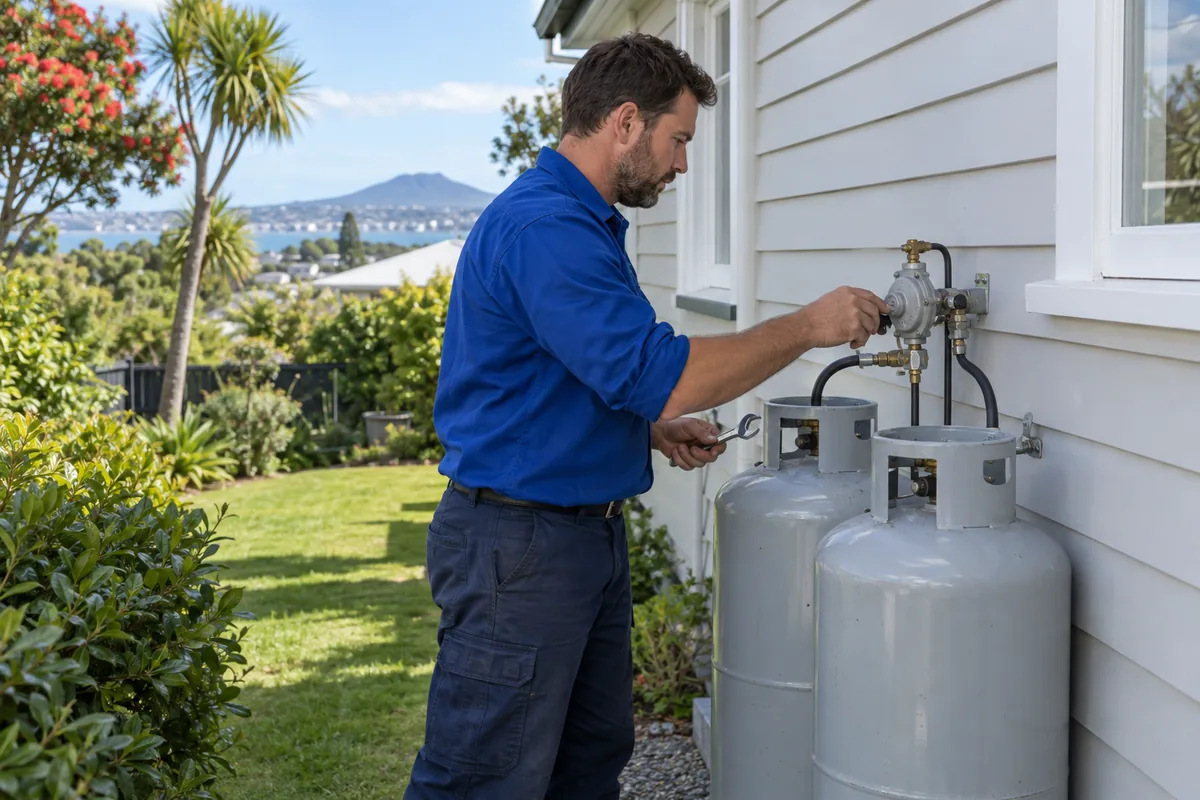
  • LPG bottle systems: regulators, changeover valves, pigtails and bottle positioning checked and repaired
  • Continuous-flow gas water heaters that will not light, cut out or run cold, on natural gas or LPG
  • Gas hobs, ovens, fires and heaters disconnected safely, repaired or reconnected and tested
  • Capping off gas points when an appliance is removed or a kitchen is changed to induction
  • Gas safety certificates and certificates of compliance issued by a certifying gasfitter where the work requires them

Signs You Need To Call Now

  • A smell of gas inside the house, at an appliance, near the meter or around the LPG bottles
  • Hissing from a pipe, a regulator or the connection behind the hob
  • Yellow, orange or lazy flames on a hob or fire that used to burn blue and crisp
  • Soot or scorch marks around a gas fire, heater or continuous-flow unit
  • The continuous-flow hot water unit fires then cuts out, shows an error code or runs cold
  • LPG bottles running out far faster than usual with no change in use
  • Headaches, dizziness or nausea at home that ease when you go outside

Gas in Auckland comes two ways. Many homes, particularly in established central, eastern and North Shore suburbs, are connected to the reticulated natural gas network operated by Vector, with a meter on the outside wall or near the boundary. Many others, including a lot of homes out west, on the fringes and in areas without a gas main, run on LPG from 45 kg bottles standing against the house, usually feeding a gas hob and a continuous-flow water heater. Both are gasfitting work, and both can go wrong at inconvenient hours.

Safety first: what to do if you smell gas

Gas suppliers add a smell to gas so a leak can be noticed. If you notice it:

  1. Do not touch switches, appliances or the garage door, and do not light anything.
  2. Open doors and windows on the way out if it is safe to do so.
  3. Turn the gas off at the meter, or at both LPG bottle valves, if you can reach them easily.
  4. Get everyone outside and away from the house, including pets.
  5. Ring 111 from outside if the smell is strong.

A gasfitter comes in once the house is safe. Do not go back inside to check whether the smell has gone.

Who is allowed to do gas work

In New Zealand, gasfitting is restricted work under the Plumbers, Gasfitters, and Drainlayers Act 2006. Only people authorised by the Plumbers, Gasfitters and Drainlayers Board (PGDB) may do it, and that includes LPG systems, not just natural gas. An authorised gasfitter carries a PGDB photo ID card, and you can check any name on the PGDB public register online.

For certain gasfitting work, a certifying gasfitter must issue a gas safety certificate and a certificate of compliance. The gasfitter will tell you which paperwork applies. Keep it with your house documents; it is your record that the work was tested and left safe.

Natural gas: Vector’s network and your pipework

Vector looks after the gas network in the street and the supply up to the meter. From the meter onward, the pipework running under the floor, through the ceiling and to each appliance belongs to the property owner. In older villas in Remuera, Parnell, Epsom and Mt Eden, gas pipework has often been extended in stages over decades, and a leak test of the whole installation is usually the starting point before any appliance is blamed.

LPG bottle systems

A typical Auckland LPG setup is two 45 kg bottles on a changeover valve, connected by flexible pigtails to a regulator and then to the house. Common faults include perished pigtails, regulators that have failed or iced up under heavy demand, changeover valves that stick, and bottles standing too close to windows, vents or drains. Houses in Titirangi and the Waitākere Ranges, where bottles sit on steep, bush-shaded sections, are prone to corrosion on fittings. When LPG runs out quicker than it should, a pressure test tells you whether a leak is to blame.

Gas hot water and appliances

Continuous-flow water heaters are the most common gas appliance in Auckland homes, on both natural gas and LPG. When one fires then cuts out, or runs cold during a shower, the fault may be the gas supply, the unit or the flue. Units on exposed coastal walls in Howick, Half Moon Bay and along the North Shore beaches also suffer from salt air. If you have an electric or low-pressure cylinder instead, see hot water cylinder repairs.

Hobs, ovens, gas fires and outdoor heaters also need servicing. Yellow or sooty flames, scorch marks and a smell when an appliance is lit all mean it should be checked before it is used again.

How an emergency gas job is done

The gasfitter isolates the supply, then pressure tests the installation to confirm whether it is holding. A leak is found with a detector and leak-test solution, and the repair is quoted before work starts. A failed joint, regulator or pipe section is replaced, or an appliance is repaired or capped off. The system is retested, appliances are checked for correct flame and flue operation, and paperwork is issued where the work requires it.

When it is not an emergency

A hob burner that will not light because it is wet or blocked, a gas fire that needs its annual service, or planning to swap from gas to induction can all wait for a normal booking. A gas smell, hissing, or signs of a faulty flue are never something to leave. Get outside first, then call. For after-hours help with anything else, see our 24 hour emergency plumber service.

How It Works

The Job, Step By Step

01

Call

Say what you smell or which appliance is faulting. If there is a gas smell you are told to get outside first, and to ring 111 from outside if it is strong. You get an honest arrival time, and the call-out and hourly rate are explained before anyone is dispatched.

02

Isolate and test

The gasfitter isolates the supply at the meter or bottles and pressure tests the pipework to see whether it holds. A leak is located with a detector and leak-test solution, not guessed at, and you are told whether it is on your side of the meter.

03

Repair

The repair is quoted before work starts. A failed fitting, regulator or section of pipe is replaced, or the appliance is repaired, reconnected or capped off. Nothing is turned back on until it passes a test.

04

Certify

The system is retested and appliances are checked for correct flame and flue operation. Where the work requires it, a certifying gasfitter issues the paperwork, and you keep a copy for your records, your insurer or a future sale.

FAQ

Emergency Gasfitter Questions

What should I do if I smell gas in my Auckland home?
Treat it seriously even if the smell is faint. Do not switch lights or appliances on or off, do not light anything and do not use a phone inside. Open doors as you leave if it is safe, and turn the gas off at the meter or at the LPG bottles if you can reach them easily. Get everyone outside. If the smell is strong, ring 111 from outside. Once the house is safe, a gasfitter finds and repairs the leak, pressure tests the pipework and checks the appliances before anything is turned back on.
Who can do gas work in New Zealand?
Gasfitting is restricted work under the Plumbers, Gasfitters, and Drainlayers Act 2006, so only people authorised by the Plumbers, Gasfitters and Drainlayers Board can do it. That applies to LPG as much as natural gas, including the pipework from the bottles and the connection to a hob or water heater. Authorised tradespeople carry a PGDB photo ID card, and you can check a name on the public register online before work starts. A handyman swapping a regulator or moving a gas hob is not allowed to do it, and it leaves you without the paperwork you may later need.
Do I get a gas safety certificate?
For certain gasfitting work, yes. A certifying gasfitter issues a gas safety certificate and a certificate of compliance for the work that requires them, recording the address and what was done. The gasfitter will tell you which paperwork applies to your job. Keep it with the house documents, because an insurer, a buyer's lawyer or a body corporate may ask for it. If someone finishes a gas job that needed certifying and cannot give you anything, ask why, and check their name on the PGDB public register.
Is the leak my responsibility or Vector's?
Vector operates Auckland's natural gas network in the street and the supply up to the meter. The pipework after the meter, running to the house and inside the walls and ceiling, and the appliances connected to it, belong to the property owner and are repaired by a gasfitter. If you are on LPG, the bottles are supplied by your gas company, while the regulator, pipework and appliances on your side are gasfitting work. If you are not sure where a smell is coming from, get out first and ring 111 from outside if it is strong.
My LPG bottles are running out much faster than usual. Could it be a leak?
It could. Many Auckland homes run a gas hob and a continuous-flow water heater from a pair of 45 kg LPG bottles with an automatic changeover valve, and a leak at a pigtail, the regulator or a joint in the pipe can quietly empty a bottle. Colder months and more showers also push usage up, so a faster changeover is not always a leak. If you can smell gas near the bottles or hear hissing, turn both bottle valves off and call a gasfitter, who can pressure test the system to confirm whether it is holding.
Why does my continuous-flow gas hot water keep cutting out?
The common causes are a gas supply problem, such as an undersized pipe, a failing regulator or an LPG bottle nearly empty before the changeover, and faults in the unit itself, such as the flow sensor, ignition or flame sensor. Units on exposed coastal walls in places like Half Moon Bay, St Heliers or Browns Bay also suffer from salt corrosion, and wind can affect flueing. The gasfitter checks the gas pressure at the unit while it is running, reads any error code and inspects the flue, rather than replacing parts one at a time.
I am changing to an induction cooktop. What happens to the gas hob?
The gas point behind the old hob has to be disconnected and capped properly by an authorised gasfitter, and the work tested, not just left with a closed valve inside the cabinet. If the hob was your last gas appliance, the pipework can be made safe back to the meter or the bottles, and you can talk to your gas retailer or LPG supplier about closing the account or collecting the bottles. The new induction cooktop needs a suitable electrical circuit, which is separate work for a licensed electrician.

Water Where It Shouldn't Be?

Turn it off at the toby, then get a licensed Auckland plumber on the way. The rate is explained before anyone is dispatched.