Skip to content

Hot Water Cylinder Repairs Auckland

No hot water, leaking cylinders, running relief valves and failed elements on low-pressure, mains-pressure, gas and wetback systems

What's Included

Hot Water Cylinder Repairs In Auckland

No hot water, a leaking cylinder or a relief valve that will not stop running. Diagnosed, made safe and repaired or replaced, quoted first.

  • No hot water diagnosed on electric cylinders, from the element and thermostat to the cylinder switch and wiring connections
  • Leaking low-pressure copper cylinders and header tanks isolated and assessed for repair or replacement
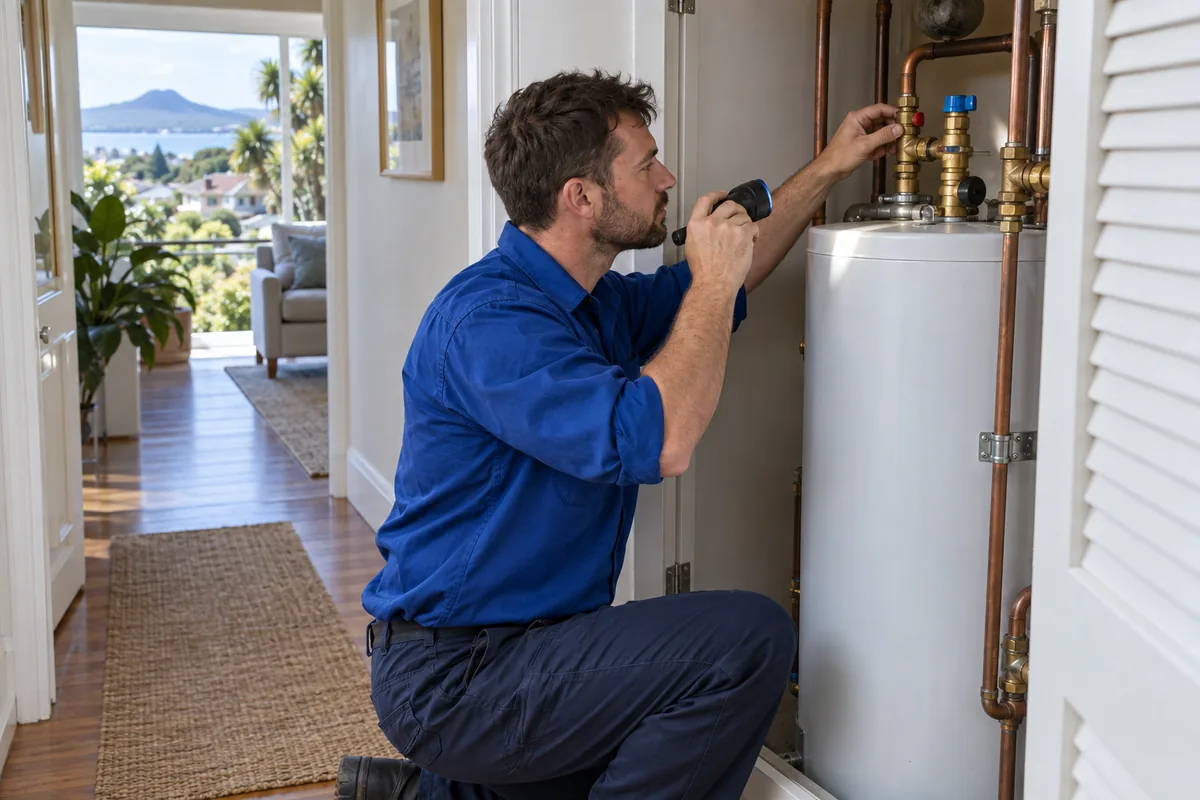
  • Mains-pressure valve packs serviced, including pressure-reducing, pressure relief and tempering valves
  • Relief valves dripping or running from the overflow pipe on the roof diagnosed and fixed
  • Gas continuous-flow units on natural gas or LPG checked by a gasfitter
  • Seismic restraints checked and fitted where they are missing
  • Replacement cylinders supplied and installed, with advice on low-pressure versus mains-pressure options

Signs You Need To Call Now

  • Water is leaking from the cylinder itself or pooling on the cupboard floor
  • The relief valve or overflow pipe on the roof runs constantly, not just a drip
  • Steam or hot water is spitting from the vent pipe on the roof
  • Hot water taps run cold or lukewarm after the switch and power have been checked
  • Water at the tap is scalding hot, or temperature swings suddenly in the shower
  • A gas smell near the continuous-flow unit or LPG bottles

No hot water is one of the most common calls a plumber in Auckland gets, and one of the most disruptive for a household. It usually comes down to one of a handful of faults, and which one depends on the type of system you have. Auckland has a mix of everything: low-pressure copper cylinders in villas and state houses, mains-pressure cylinders in newer homes and townhouses, gas continuous-flow units on natural gas or LPG, wetbacks behind older wood burners, and a growing number of heat pump water heaters.

Know which system you have

Low-pressure cylinders

Many older homes in suburbs such as Devonport, Mount Eden, Onehunga, Mount Albert and New Lynn still have a low-pressure, open-vented copper cylinder. It is fed by a header tank in the ceiling and has a vent pipe that goes up through the roof. Shower pressure is gentle, and the cylinder often sits in a hallway cupboard. These cylinders can last a long time, but when they fail, it tends to be a weep from the base, a burnt-out element or a thermostat that has stuck on.

Mains-pressure cylinders

Homes built or renovated more recently, from Botany Downs and Flat Bush to Hobsonville Point, Albany and Takanini, usually have a mains-pressure cylinder with a valve pack. That pack includes a pressure-reducing valve, a pressure relief valve and a tempering valve, which blends water down to a safe temperature for bathrooms. Most failures on these systems are valve faults rather than the cylinder itself.

Gas, wetback and heat pump

Gas continuous-flow units heat water on demand and are common in townhouses. Wetbacks heat water from a wood burner and are usually paired with an electric element. Heat pump water heaters sit outside and work like an air-conditioner in reverse. Each fails differently, so tell the plumber what you have when you call.

Checks to make before you call

Look at the switchboard for a tripped switch or a switched-off hot water isolator. Many Auckland homes are on controlled power plans where the cylinder can be switched off for periods at peak times, so give it time if the rest of the house has power. For an LPG system, check the bottles are not empty. The blog guide hot water cylinder not working walks through these checks in more detail.

When a cylinder is leaking

A leaking cylinder is an emergency, because it will keep leaking until it is isolated.

  1. Switch the cylinder off at the switchboard.
  2. Close the cold water valve that feeds the cylinder. If you cannot find it, turn the water off at the toby at the front boundary.
  3. For a gas unit, turn the gas off at the meter or the LPG bottle.
  4. Move stored items out of the cupboard and put towels down.

Water from the cylinder or the relief valve can be very hot, so keep children away.

Common faults and how they are fixed

Burnt-out element or failed thermostat

The most common cause of no hot water on an electric cylinder. The plumber tests both, replaces the failed part and checks the wiring connections. A thermostat that has stuck on causes the opposite problem: overheating, with steam or water spitting from the vent pipe on the roof of a low-pressure system.

Relief valve running

On a mains-pressure cylinder, a relief valve that runs constantly from the overflow pipe on the roof usually means the valve itself is worn or the pressure-reducing valve upstream has failed. Both are replaced as part of a valve pack service.

Tempering valve failure

Scalding water at the basin, lukewarm showers or temperature that swings mid-shower often trace back to the tempering valve. Hot water should be stored at 60°C or more to control Legionella, and the tempering valve is what makes it safe to use.

Cylinder failure and replacement

If the inner tank has corroded through, the cylinder has to be replaced. The plumber explains the options, including whether an older low-pressure system can be upgraded to mains pressure. That sometimes requires replacing old galvanised pipework first. Every new cylinder is fitted with proper seismic restraints, which many older installations lack. Where gas work is involved, it is done by a gasfitter, as covered on the emergency gasfitter page.

When it is not an emergency

Lukewarm water that is still usable, a relief valve that drips occasionally while heating, or a cylinder that is simply getting old can usually wait for a daytime booking. A leaking cylinder, a relief valve running constantly, steam from the roof vent, scalding water, a gas smell, or no hot water in a home with a baby or someone unwell are worth a call now. Across the city, from Howick and Manurewa to the North Shore, the call-out and hourly rate are explained before dispatch and the repair or replacement is quoted before work starts.

How It Works

The Job, Step By Step

01

Call

Describe the cylinder and what it is doing. You are asked a few questions to rule out a tripped switch, told the call-out and hourly rate, and talked through making it safe.

02

Make safe

If the cylinder is leaking, you are shown how to switch it off at the switchboard and close the cold feed valve, or turn off the gas, while the plumber is on the way.

03

Diagnose and quote

The plumber tests the element, thermostat, valves and cylinder, then explains whether a repair or a replacement makes sense and prices it before any work starts.

04

Repair or replace

Parts are replaced or a new cylinder installed and restrained, the system refilled and brought up to temperature, and the relief and tempering valves checked.

FAQ

Hot Water Cylinder Repairs Questions

What should I check before calling about no hot water?
First look at the switchboard for a tripped switch or a switched-off hot water isolator. Many Auckland homes are on a controlled power plan where the cylinder can be switched off for periods at peak times, so if the rest of the house has power, give it time before assuming a fault. Check whether anyone has turned off the switch near the cylinder cupboard. For gas units, check the LPG bottle is not empty and the gas valve is on. If none of those explains it, the element or thermostat has most likely failed, which is a common, repairable fault.
What is the difference between low-pressure and mains-pressure cylinders?
Older Auckland homes, including many villas, bungalows and state houses, have low-pressure copper cylinders fed from a header tank in the ceiling, with a vent pipe through the roof. They give gentle shower pressure. Newer homes and most renovations use mains-pressure cylinders, which run at a much higher pressure through a valve pack with a pressure-reducing valve, a pressure relief valve and a tempering valve. The two fail in different ways. When replacing a low-pressure cylinder, you can often upgrade to mains pressure, but older galvanised pipework may need replacing first to cope.
My cylinder is leaking. Can it be repaired?
It depends where the water is coming from. A leak from a valve, a fitting or the element seal is usually repairable. A leak from the body of the cylinder itself, often a weep from the base or through the jacket, means the inner tank has corroded and the cylinder needs replacing. Low-pressure copper cylinders in older homes can reach this point after decades of service. The plumber will show you where the leak is and explain the options before quoting. In the meantime, switch it off at the switchboard and close the cold water valve feeding it.
Why is water running out of the pipe on my roof?
On a mains-pressure cylinder, a small pipe usually discharges from the relief valves to the roof or outside. An occasional drip while the cylinder is heating can be normal on some systems, but a steady flow points to a worn relief valve or a failed pressure-reducing valve. On a low-pressure cylinder, water or steam spitting from the vent pipe on the roof usually means the thermostat has failed and the water is overheating, which should be dealt with promptly. Switch the cylinder off at the switchboard and call a plumber.
What does the tempering valve do?
Hot water in the cylinder should be stored at 60°C or more to control Legionella bacteria. That is too hot for washing, so a tempering valve blends hot and cold water to deliver a safer temperature to bathrooms. When a tempering valve fails, you may get scalding water at the basin or shower, water that is only lukewarm, or temperature that swings while you shower. It is a common failure on mains-pressure systems in Auckland's newer homes and townhouses, and replacing it is a routine job for a licensed plumber.
Do hot water cylinders in Auckland need seismic restraints?
Yes. New Zealand is an earthquake country, and hot water cylinders must be restrained so they cannot topple and break their pipework in a quake. Many older Auckland cylinders were installed without adequate straps, or the restraints were left off during a later replacement. A full cylinder is very heavy, and one that falls can cause serious water damage and scalding. The plumber checks the restraints on every hot water visit and can fit them where they are missing or inadequate. Installation of a new cylinder always includes proper restraints.
Can you fix gas continuous-flow and wetback systems?
Yes. Gas continuous-flow units, on Vector natural gas or LPG bottles, are common in Auckland townhouses and renovated homes. Work on the gas side must be done by a gasfitter, and some gas work requires a gas safety certificate. Wetbacks heat water from a wood burner and are found in older homes, often alongside an electric element in a low-pressure cylinder. Heat pump water heaters are also becoming more common. Tell the plumber which system you have when you call, so the right person and parts come to the job.

Water Where It Shouldn't Be?

Turn it off at the toby, then get a licensed Auckland plumber on the way. The rate is explained before anyone is dispatched.