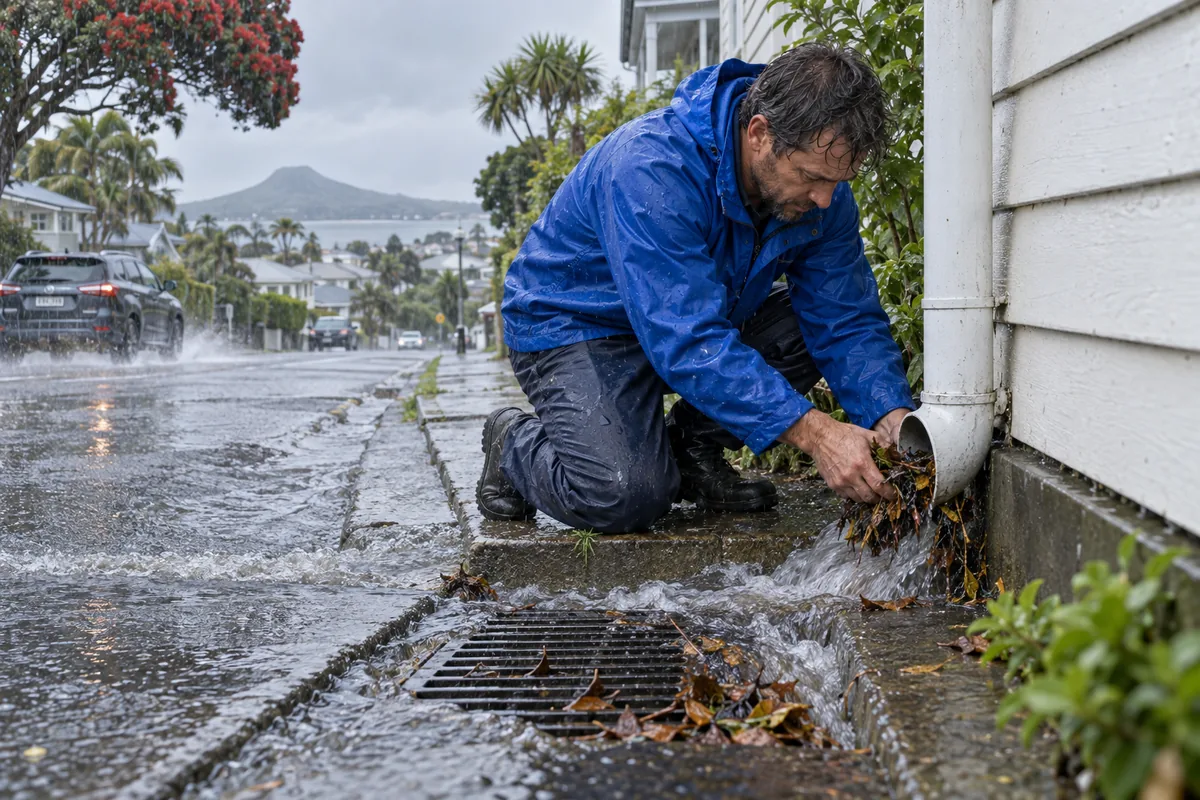
Auckland gets a lot of rain, and every so often it gets far more than its drains can carry. On 27 January 2023, Auckland Anniversary Weekend, the city recorded its wettest day on record, and homes flooded across Wairau Valley, Mt Eden, Kumeū, Henderson and elsewhere. Two weeks later Cyclone Gabrielle brought slips and damage to the west coast and the Waitākere Ranges, and there was more flooding in May 2023. The plumbing side of events like these is overflowing gully traps, sewage coming up where it should not, downpipes that cannot keep up and stormwater drains that fail.
What goes wrong in an Auckland storm
Overflowing gully traps and sewage backing up
The gully trap is the outdoor trap, usually beside the house, that takes waste water from the kitchen, bathroom and laundry into the wastewater drain. In a storm it can overflow for several reasons: your private drain is part-blocked by roots or debris, a downpipe has been connected into the wastewater drain, the gully rim is too low so surface water floods in, or the public sewer is overloaded and pushing back. Sewage coming up through the gully trap is unpleasant, but it is better than the alternative. The gully sits lower than the fixtures inside so that a backed-up drain relieves outside, not through your shower or toilet.
Combined sewers in the older central suburbs
Parts of the central isthmus, including Grey Lynn, Ponsonby, Herne Bay, Freemans Bay, Westmere, Point Chevalier and parts of Mt Eden and Kingsland, are on a combined wastewater-and-stormwater network that overflows in heavy rain. Watercare’s Central Interceptor tunnel, running from Grey Lynn to the Māngere treatment plant, is designed to cut those overflows. Until then, homes in these suburbs benefit most from a correctly set gully trap and a private drain in good condition.
Blocked downpipes, sumps and soakholes
Gutters and downpipes full of leaves from pōhutukawa, oaks and liquidambars overflow against weatherboards and into subfloors. Private stormwater pipes crack where roots find the joints. In areas without a public stormwater connection, roof water goes to a soakhole, and a silted soakhole simply fills up and stops.
Slips and moving ground
Much of the North Shore and West Auckland sits on Waitematā clay, which swells, shrinks and slips on slopes after heavy rain. A slip can crack or pull apart drains, and a leaking drain can make a slope worse.
Who looks after what
- Watercare owns the public water supply and the public wastewater network, including the sewer your private drain joins.
- Auckland Council’s Healthy Waters looks after public stormwater: pipes, catchpits, overland flow paths and streams.
- The property owner is responsible for gutters, downpipes, private stormwater pipes, soakholes and the private wastewater drain up to where it joins the public sewer.
A good plumber tells you which side a fault is on, and does not quote you to fix something that belongs to Watercare or the council.
What to do before the plumber arrives
- Stay safe. Keep out of floodwater, stay clear of wet power points and switchboards, and ring 111 if lives are at risk.
- Stop using water inside if the gully trap or a floor waste is overflowing. No flushing, showers or washing machine.
- Clear gutters and downpipe grates only if you can do it safely from the ground. Do not climb ladders in a storm.
- Check the street. If neighbours have the same problem, report it to Watercare or Auckland Council.
- Take photos and video before cleaning up. Photos and a written report help with an insurance claim.
How the job is done
The plumber starts at the gully trap and inspection points, working out whether the blockage is private or public. Private drains are cleared with a machine or a water jetter, then a camera inspection shows roots, cracks, bellies or wrong connections. Downpipes and sumps are cleared and checked for proper flow, and soakholes are inspected and cleaned. Where the pipe is broken, the repair is quoted before work starts, and larger drain replacements are planned with a drainlayer once the ground is safe. See blocked drains for more on how drains are cleared and repaired.
When it is not an emergency
A gutter overflowing in a downpour that empties once the rain eases, or a yard that takes a few hours to drain, can wait for a dry-day booking. Sewage coming up, water getting under the floor or into the house, and drains broken by a slip should be dealt with now. For after-hours storm call-outs anywhere in the city, including West Auckland, our 24 hour emergency plumber service is available, and you are given an honest arrival time on the phone.