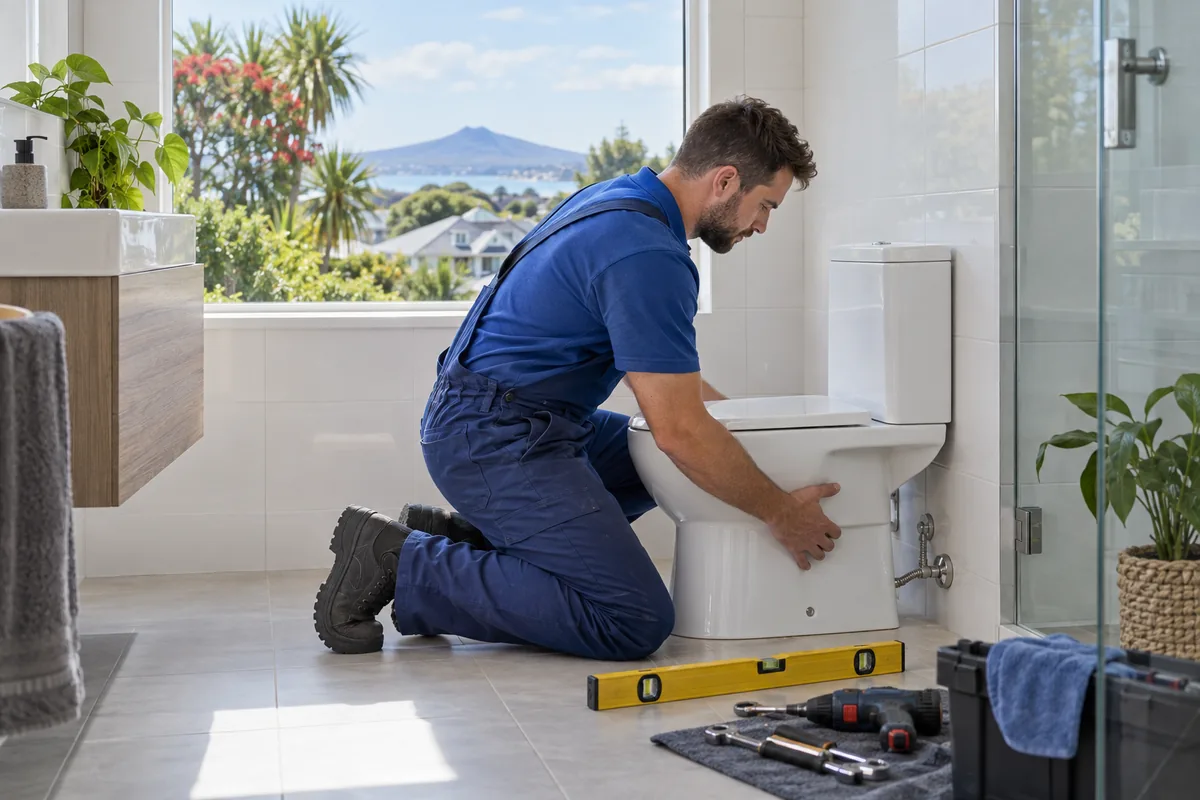
A toilet problem goes from annoying to urgent quickly, especially in the many Auckland homes that still have only one toilet. Most toilet call-outs come down to a handful of causes: a blocked pan, a blocked drain further down the line, a cistern that will not stop running, or a leak at the base. The fix depends on which one it is, and a good plumber works that out before taking anything apart.
Blocked toilet or blocked drain?
From inside the bathroom, a blocked pan and a blocked drain look the same. The difference shows up elsewhere. If the toilet is the only fixture misbehaving, the blockage is probably in the pan or just past it, often wipes, sanitary items or a child’s toy. If the shower drains slowly, the toilet gurgles when the washing machine empties, or the gully trap outside is full, the blockage is in the drain itself.
Why Auckland drains block
Older suburbs have older drains. Villas and bungalows in Ponsonby, Grey Lynn, Kingsland and Mt Eden, and state houses in Mt Albert, Ōtāhuhu and Papatoetoe, commonly still have earthenware drains with joints every metre or so. Roots from pōhutukawa, oaks, liquidambars and hedges get into those joints and catch whatever comes down the pipe. On the North Shore and in West Auckland, Waitematā clay moves with the seasons and can crack or dip a drain, leaving a belly where waste settles. In infill townhouses, several homes may share one drain, so a blockage from next door can back up into your toilet. Our blocked drains service covers the drain side of the job in detail.
Running cisterns and leaks
A cistern that keeps trickling or refilling is rarely urgent, but it wastes water that appears on your Watercare bill. The usual culprits are a worn flush valve seal or an inlet valve that will not shut off, often because grit has lodged in it after mains work in the street.
Leaks are more pressing. Water around the base of the pan usually comes from the pan connector, the cistern-to-pan seal or the flexi hose feeding the cistern. In a villa or state house on piles, that water soaks into the timber floor. In an apartment or upstairs townhouse bathroom, it goes into the ceiling below. Braided flexi hoses have a limited life and fail without warning, and a burst hose to a cistern is one of the most common causes of apartment floods in Auckland. If you are not sure where the water is coming from, leak detection finds the source without guesswork.
What to do before the plumber arrives
- Turn off the cistern stop valve. It is the small tap on the wall behind or beside the toilet. Turn it clockwise. If it is seized, turn the water off at the toby at the front boundary.
- Stop flushing. Each flush adds water to a blockage that has nowhere to go.
- Stop using other fixtures if the shower, basin or gully trap is also backing up.
- Lift out anything valuable from the floor, and put towels down to limit the spread.
- Take photos of any damage before cleaning up. Photos and a written report help with an insurance claim.
- Keep chemical drain cleaners out of it. They rarely shift a real blockage and make the job hazardous for whoever clears it.
How the job is done
The plumber starts by asking what else in the house is affected and checking the gully trap and any inspection points outside. A pan blockage is cleared with a toilet auger or by lifting the pan when something solid is stuck. A drain blockage is cleared from the nearest access point with a machine or water jetter, and if it keeps happening a camera inspection shows whether roots, a broken pipe or a belly is behind it.
Cistern repairs mean replacing the inlet valve, flush valve or seals, using parts that suit the existing cistern where they are still available. A leaking or rocking pan is lifted, resealed with a new connector and refitted. When a suite is cracked or too old to repair sensibly, replacement is quoted as an option, and you decide. Every repair is quoted before work starts.
When it is not an emergency
A slow-running cistern, a loose seat, a flush button that sticks or a toilet that needs a second flush occasionally can wait for a normal booking. So can a blocked toilet if there is a second working toilet in the house and nothing else is backing up. It becomes urgent when it is your only toilet, when sewage is coming up anywhere, or when water is leaking into floors or ceilings. For those, a 24 hour emergency plumber is available day and night, and you are given an honest arrival time on the phone.